
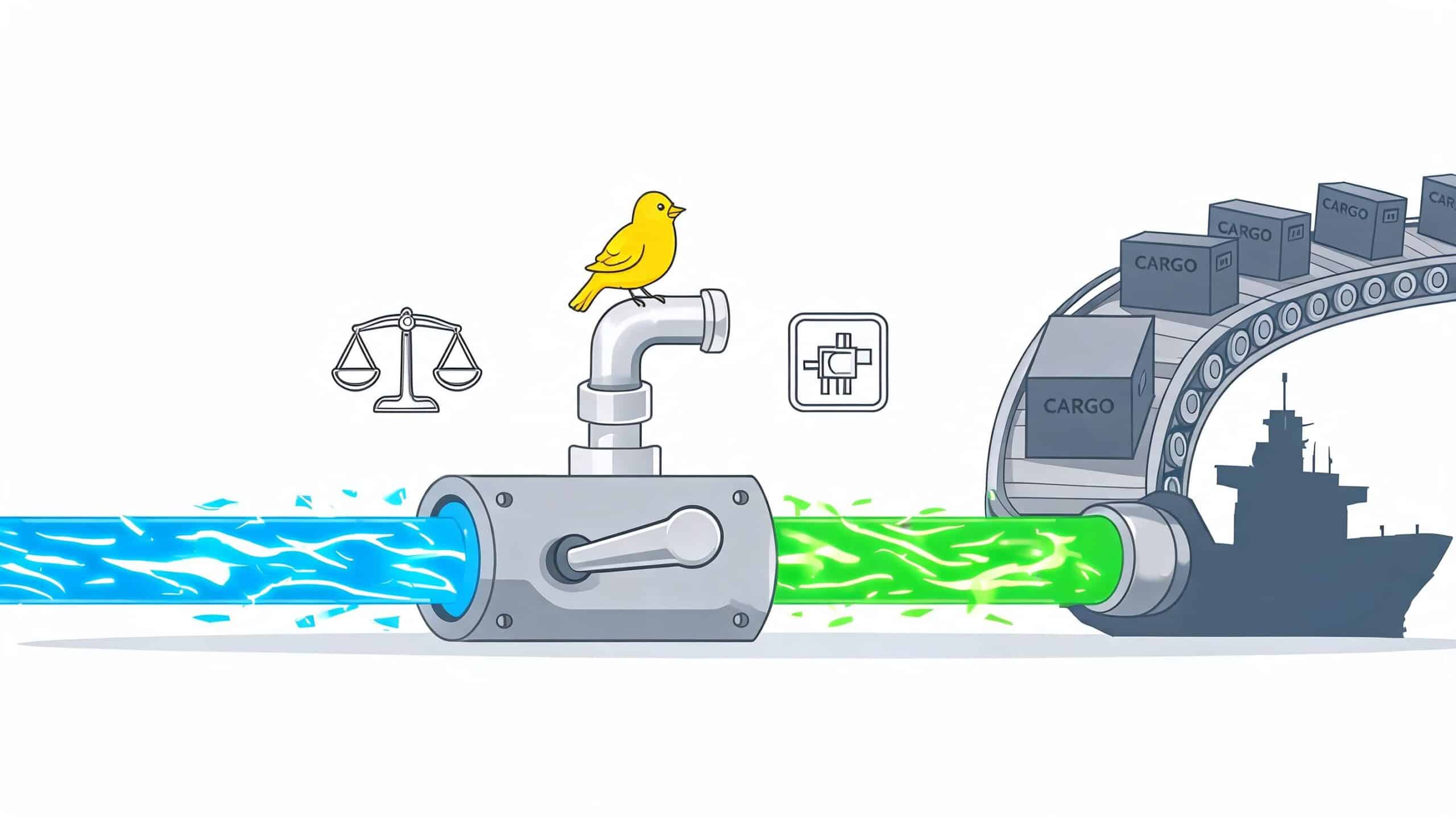

A release goes sideways at 22:40 on a Thursday. The application is healthy in staging, the pipeline passed, and somebody approved the deployment. Then production traffic starts behaving differently. One Kubernetes Ingress rule routes more aggressively than expected. A retry policy amplifies load on a struggling downstream service. The rollback script exists, but it depends on state that changed during the rollout, so now two senior engineers are tracing YAML, logs, and dashboards while the product team waits for an update.
Most CTOs at growing software companies have lived some version of this. The names change. Sometimes it's NGINX, sometimes Istio, sometimes an AWS Application Load Balancer, sometimes a GitHub Actions workflow glued to Helm charts and shell scripts. The pattern is the same. Your best engineers are acting as unpaid traffic controllers for infrastructure that doesn't create customer value.
That's the fundamental problem with deployment traffic management. It isn't just a networking concern. It's a business systems problem that determines whether your team ships calmly or burns cycles on operational rework. When release routing, failover, rate controls, and rollback logic are all hand-built, you're effectively running an internal platform company on the side.
If that sounds familiar, it's worth revisiting what an automated deployment pipeline should do for the business. It should reduce toil, lower deployment risk, and let product teams move without dragging every release through a maze of bespoke controls.
Introduction The Hidden Cost of Your Deployment Pipeline
The hidden cost rarely shows up as a single invoice. It shows up in fragmented attention. A staff engineer spends half a sprint debugging release automation. A platform lead gets pulled into every high-risk launch because nobody trusts the scripts enough to leave them alone. A CTO approves another infrastructure hire, not because the roadmap demands it, but because the delivery system has become fragile.
The second company you never meant to build
A lot of teams say they're building a product. In practice, they're also building a private control plane for deployments, runtime routing, observability wiring, secrets handling, permissions, and rollback safety. That stack becomes a product of its own, except it has no dedicated customers, weak documentation, shifting requirements, and a maintenance burden that compounds.
Practical rule: If your release process depends on tribal knowledge, you don't have a platform. You have a recurring incident.
The irony is that traffic management looks deceptively small at first. Route some requests here, some there. Hold back traffic from unhealthy instances. Slow bad clients down. Shift users gradually during a release. None of that sounds exotic until you try to make it reliable across environments, teams, and cloud providers.
Why this matters to leadership
From a CTO's seat, traffic management is where engineering velocity and operational reliability collide. If the control layer is brittle, every launch becomes a negotiation between speed and safety. That's not a technical inconvenience. That's a drag on product throughput.
And once the business starts expanding across AWS, GCP, and Azure, the cost of keeping that control layer consistent rises fast. Different load balancers expose different capabilities. Kubernetes abstractions help, but they don't eliminate provider-specific behaviour. Somebody still has to design the policy, wire the tooling, observe the impact, and own the failure modes.
Why Modern Traffic Management is Mission-Critical
Traffic management used to sound like “send requests to healthy servers”. That's still part of it, but it's far from enough. In a modern stack, traffic management decides how new versions are introduced, how failures are contained, how regional issues are isolated, and how customer experience holds up under change.

Reliability is now a routing problem
When applications were simpler, a basic load balancer and a maintenance window were often enough. That model breaks once you're running microservices, asynchronous jobs, APIs, feature flags, multiple regions, and customer-facing releases throughout the week. A deployment is no longer just “new code on servers”. It's a controlled movement of live user traffic through a changing system.
The business world outside software has already accepted that better traffic control is core infrastructure. The global traffic management market is projected to grow from USD 49.23 billion in 2025 to USD 55.07 billion in 2026, with forecasts reaching USD 135.03 billion by 2034 at an 11.86% CAGR, according to Fortune Business Insights on the traffic management market. The drivers they identify, including real-time monitoring, integrated control systems, and growing reliance on software for predictive optimisation, map closely to what software organisations now need in their own delivery infrastructure.
Poor traffic control creates business risk
In software delivery, weak traffic management causes familiar damage:
- Releases become all-or-nothing: Teams ship too much change at once because partial rollout is awkward.
- Incidents spread further than they should: A failing dependency receives traffic longer than it should.
- Diagnosis takes too long: Routing behaviour, health checks, and retry policies live in different places.
- Customer trust erodes: Users don't care whether the outage came from Kubernetes, an API gateway, or a service mesh. They just see instability.
Traffic management isn't a nice operational extra. It's the control surface for uptime, safe releases, and engineering speed.
Why building it yourself is usually the wrong call
The strategic mistake is assuming this capability must be assembled in-house because it's “infrastructure” and therefore somehow more controllable if you own every layer. In reality, custom traffic management stacks absorb senior engineering time into work that competitors can buy, standardise, and operationalise faster.
CTOs should treat this as a capital allocation question. Are your engineers being paid to differentiate the product, or to maintain the plumbing that decides whether ten percent of traffic should hit version B for fifteen minutes while health metrics stabilise?
Owning the full stack sounds powerful. Owning its edge cases is what gets expensive.
Core Traffic Management Patterns Explained
The core patterns are straightforward in concept. The hard part is making them safe, observable, and repeatable under production pressure.
Load balancing and traffic shifting
Load balancing is the base layer. Think of it as the smart traffic cop at a busy junction. It decides which backend should handle each incoming request so no single instance gets overwhelmed while others sit idle. In practice, this means health checks, session behaviour, retry rules, TLS handling, and provider-specific features that don't behave identically across environments.
Then you get to traffic shifting, which is where release strategy becomes operational discipline.
| Pattern | What it does | Where teams get caught |
|---|---|---|
| Blue-green deployment | Keeps two production environments and switches traffic between them | Data migrations, cache compatibility, and keeping both environments truly identical |
| Canary release | Sends a small share of users to a new version first | Measuring the right signals fast enough to know whether to continue |
| A/B routing | Directs different user groups to different variants | Segment logic, analytics integrity, and keeping experiments from contaminating release safety |
Blue-green sounds simple because the concept is simple. Maintain two rooms, then move everybody from one to the other. The operational reality is less tidy. Databases don't always swap cleanly, background jobs can run twice, and external integrations may not respect your nice clean boundary.
Canary releases are more conservative. You let a small subset of traffic hit the new version, watch what happens, then increase gradually. They're often the best fit for fast-moving product teams because they reduce blast radius. They also require confidence in monitoring, rollback triggers, and routing controls that don't drift between clusters.
If your team is still debating which release model fits which service, this breakdown of blue-green deployments vs canary deployments is a useful decision aid.
Circuit breakers and rate limiting
Two more patterns matter when systems get noisy.
Circuit breakers stop requests flowing to a dependency that is already failing. Without them, a sick service can pull healthy services down with it. Teams often discover this too late because retries feel safe until they multiply across layers.
Rate limiting protects a service by controlling how many requests it accepts over time. It's useful for abuse prevention, fair usage, and keeping spikes from flattening a backend. It also needs careful policy design. Limits that are too strict break legitimate traffic. Limits that are too loose don't protect anything. For a security-focused explanation of why this matters at the edge, Essential rate limiting for pentesters is a solid reference.
Operator's view: The pattern isn't the product. The safety around the pattern is the product.
Why these “simple” patterns become platform work
Every one of these patterns expands into implementation detail:
- Configuration drift: The YAML in one cluster isn't quite the same in another.
- Policy sprawl: Gateway rules, ingress annotations, and mesh configs duplicate intent in different formats.
- Rollback complexity: Reversing traffic is easy. Reversing state isn't.
- Human timing: Somebody has to watch dashboards and decide whether to continue.
That's why traffic management becomes expensive long before it looks expensive on a roadmap.
The DIY Maze of Traffic Management Tools
Organizations don't typically choose a traffic management stack once. They accumulate one. An ALB for public entry. NGINX Ingress in Kubernetes. CloudFront or a CDN layer in front. An API gateway for auth and quotas. Maybe Traefik for one environment because it was faster to set up. Then somebody adds Istio or Linkerd because service-to-service control is getting messy.
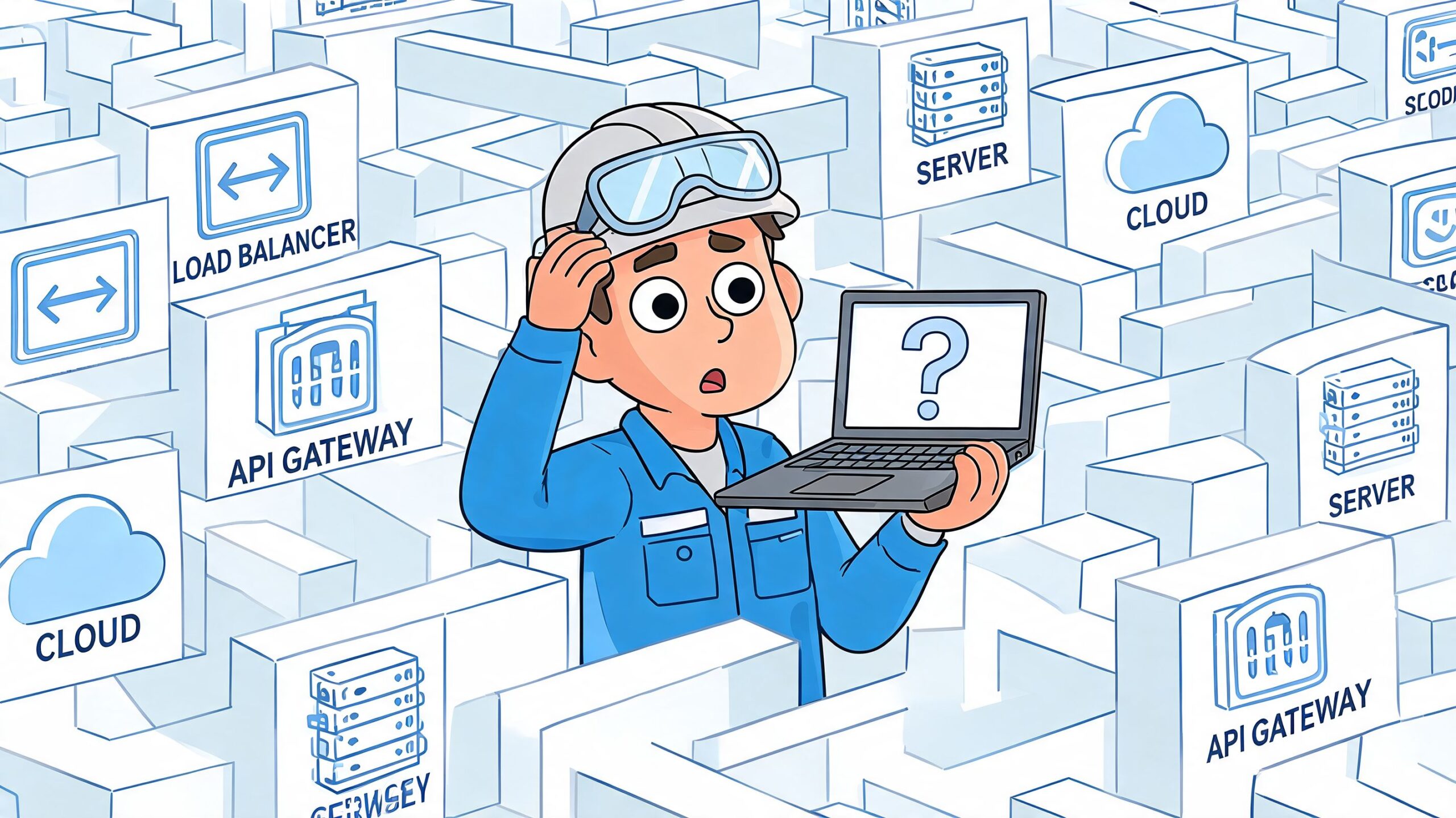
The stack looks modular until you have to operate it
On paper, the ecosystem looks flexible. In reality, each layer introduces another policy model, another upgrade cycle, and another place where a minor mistake can become a production issue.
A typical DIY path looks something like this:
- Cloud load balancers: AWS ALB or NLB, GCP load balancing, Azure-native equivalents.
- Kubernetes edge controls: NGINX Ingress, Traefik, HAProxy, or cloud-managed ingress variants.
- API gateways: For auth, rate limits, routing rules, and request policy enforcement.
- Service mesh: Istio, Linkerd, or similar for east-west traffic, retries, mTLS, and canaries.
- CI/CD glue: GitHub Actions, GitLab CI, Argo CD, Helm, Terraform, and shell scripts holding the whole thing together.
Each tool solves a real problem. The issue is cumulative ownership.
The hidden TCO nobody budgets properly
The biggest line item isn't the licence cost. It's the attention tax on experienced engineers. Every custom rollout controller, every ingress annotation convention, every emergency workaround becomes another bit of operational knowledge that the company must maintain.
Here's where leadership teams usually underestimate the total cost of ownership:
| Hidden cost | What it looks like in practice |
|---|---|
| Expert dependency | One or two engineers become the only people who understand routing and release internals |
| Upgrade burden | Controller changes, mesh upgrades, and Kubernetes version shifts create compatibility work |
| Security patching | Internet-facing components need constant review and disciplined update cadence |
| Policy fragmentation | Auth, TLS, traffic splitting, and retries are managed in different systems |
| On-call complexity | Incidents require multiple consoles, logs, and configuration sources to diagnose |
If your deployment control plane needs specialist operators to function safely, it's not reducing complexity. It's relocating it.
What doesn't work for scaling teams
What usually fails isn't the technology itself. Istio isn't “bad”. NGINX isn't “wrong”. The problem is mismatch. A startup or scale-up adopts tooling designed for organisations with deeper platform benches, then tries to run it with a small team whose real job is delivering product.
That creates a predictable pattern:
- The first setup works.
- The company grows.
- More services appear.
- Traffic rules become harder to reason about.
- A few people become bottlenecks.
- Delivery speed drops while infrastructure effort rises.
And because the stack was assembled incrementally, replacing parts later becomes politically and technically awkward. Nobody wants to admit the bespoke platform has become a liability because so much engineering identity is tied up in having built it.
Linking Traffic to Observability and Security
Traffic control without observability is guesswork. Traffic control without security is exposure. In production, those two disciplines are attached whether your architecture diagram shows it or not.
You need feedback fast
A canary release is only useful if the team can see what changed while the canary is live. That means request success rates, latency, saturation, dependency health, and user-facing symptoms have to be visible in context. If the routing layer says ten percent of requests moved, your metrics and traces need to confirm whether that ten percent is healthy or degrading.
The challenge in DIY stacks is that these signals often live apart. Traffic policy sits in an ingress controller or service mesh. Metrics sit in Prometheus or a managed monitoring tool. Logs land elsewhere. Traces may or may not be sampled correctly. By the time someone correlates the rollout with the impact, the release window has already become an incident window.
For teams thinking through the practical side of real-time monitoring, MetricsWatch on monitoring strategies is a helpful read because it frames monitoring around fast detection rather than passive dashboard collection.
Healthy release engineering depends on closed-loop feedback. Route traffic, measure impact, act automatically when thresholds break.
Every entry point is also a security boundary
The traffic layer is where authentication checks, rate limits, bot filtering, TLS decisions, and policy enforcement often begin. In a fragmented setup, those controls drift. The gateway team changes one policy. The Kubernetes team handles another. Security logging lands in a separate system. Auditability gets weaker just as exposure increases.
A strong setup ties traffic policy to security posture in one operational flow. When a new route is opened, the organisation should know who changed it, what policy applies, what telemetry it produces, and how rollback works. That sounds obvious until you inspect how many teams still treat networking, observability, and security as separate workstreams.
Why silos create dangerous gaps
The most common failure mode isn't dramatic. It's incomplete integration. A rollout works from an application perspective but bypasses expected controls. A rate limit exists at the edge but not internally. A service is reachable in ways the security team didn't intend. The platform “works” until one unusual traffic pattern exposes the seams.
That's why mature traffic management has to be seen as an operating model, not a collection of components.
How PushOps Automates Safe Release Strategies
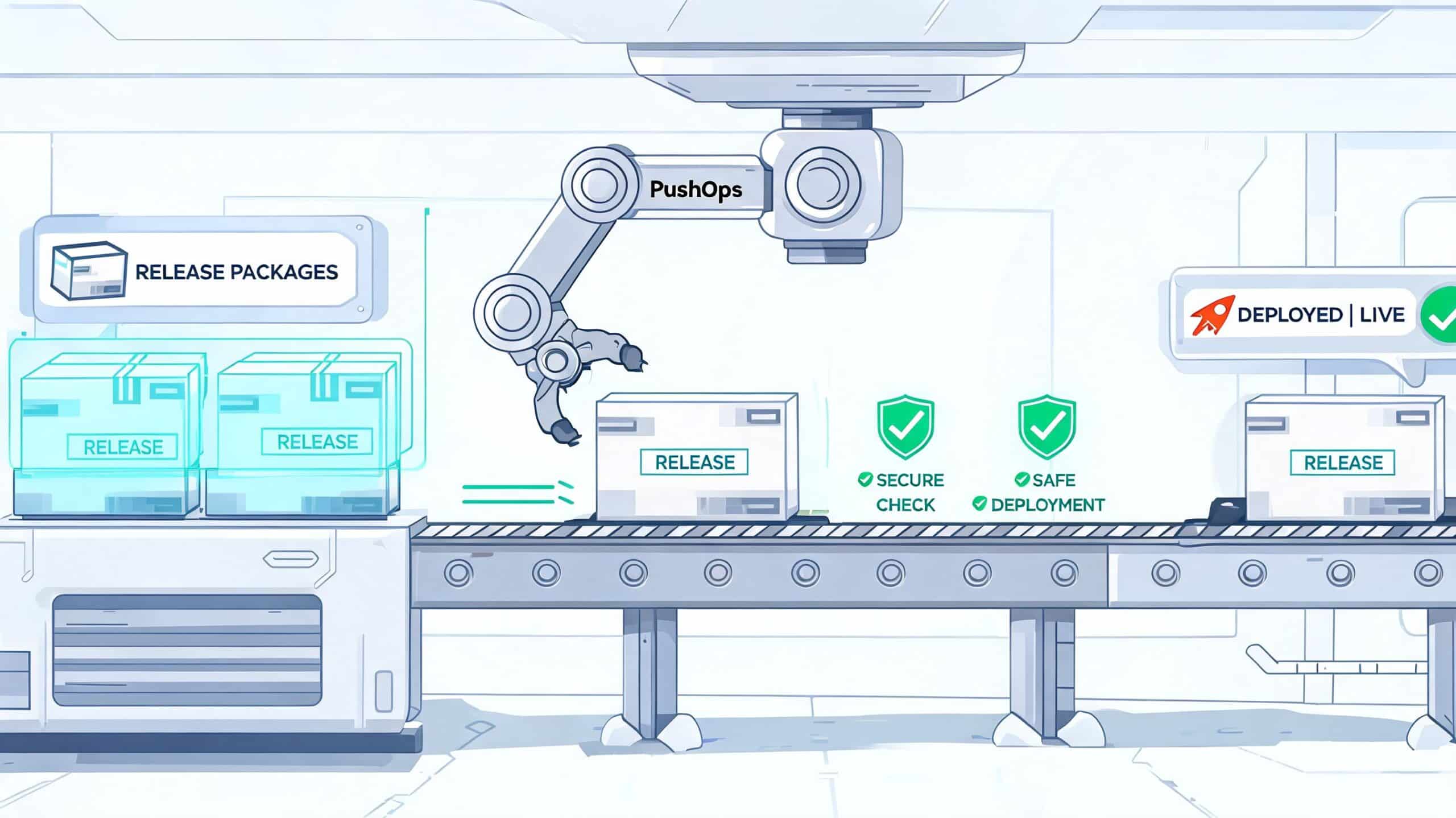
A team running across AWS and GCP decides to introduce canary releases. They already have Kubernetes in both environments. They assume this will be a modest project. Then the actual work begins. Somebody has to define routing policy, encode it in cluster-specific manifests, make the pipeline aware of rollout stages, connect deployment events to monitoring, and decide what constitutes an automatic rollback.
Before automation
The usual first version is held together by good intentions and too much custom work.
One engineer writes Istio or ingress configuration for traffic splitting. Another updates CI/CD logic so production promotion can happen in stages. A third wires alert thresholds to Slack and asks the on-call engineer to watch the graphs during the rollout. It works, but only if the right people are online and the change matches the assumptions baked into the scripts.
That's not a release strategy. That's a carefully managed ritual.
After abstraction
A managed delivery platform changes the shape of the problem. The team doesn't need to handcraft every control every time. They choose a release strategy, define the guardrails, and let the platform handle the repetitive mechanics across cloud environments.
The practical improvements are straightforward:
- Release strategies become standardised: Canary, blue-green, and staged rollouts stop being per-team inventions.
- Observability is part of the workflow: Health checks and release signals are evaluated during the rollout, not after users complain.
- Rollback is policy-driven: Teams don't depend on somebody remembering the right manual reversal sequence.
- Security controls stay attached: Access, audit logs, and permissions are enforced as part of the delivery path.
If your organisation is trying to separate code deployment from customer exposure, this guide to feature flags and safe releases is useful because it shows how release control should work without forcing infrastructure changes for every product experiment.
The most valuable release automation removes repeated judgment calls from tense moments.
What CTOs should notice
The primary benefit isn't that engineers click fewer buttons. It's that the company stops paying senior people to repeatedly solve the same infrastructure choreography. The operating model becomes consistent. A service launched on AWS follows the same release discipline as one running on Azure or GCP. Teams get a paved path instead of a loose toolkit.
That matters because traffic management is one of those domains where “we built it ourselves” often sounds better in architecture reviews than it feels during on-call. Once the release machinery is abstracted, engineering effort moves back to the product where it belongs.
Best Practices for Smarter Traffic Management
The best traffic management decisions are usually organisational before they're technical. They define how much risk your team accepts during change, and how much manual effort you're willing to spend to keep releases safe.
Questions worth asking your team
- Can we roll out gradually by default: If every release still goes to all users at once, the team is carrying more risk than necessary.
- Do we separate deployment from release: Shipping code to production shouldn't mean exposing all users immediately.
- Can we prove health during a rollout: CPU graphs aren't enough. You need user-facing indicators tied to the traffic shift.
- Is rollback automatic or ceremonial: If rollback requires three engineers and a checklist, it's too fragile.
- Are policies consistent across clouds and environments: Different tooling is fine. Different safety standards are not.
Practical operating habits
Some patterns keep working across team sizes and architectures:
- Standardise a small set of rollout patterns. Most services don't need bespoke delivery logic.
- Attach release decisions to observable outcomes. Don't promote traffic because the pipeline completed. Promote because the service remained healthy.
- Keep security policies close to the entry points. Don't treat routing as separate from access and abuse controls.
- Reduce optional complexity. If a service mesh is solving one edge case while adding five classes of maintenance burden, reassess.
For product teams thinking about controlled experimentation on the customer side, Otter A/B's theme testing guide is a useful reminder that experimentation only works when routing logic and measurement stay aligned.
What good looks like
Good traffic management is boring in the right way. Teams know which release modes exist, who can use them, what metrics matter, and what happens when a rollout degrades. Nobody improvises under pressure. Nobody searches old chat threads for the right YAML patch. The system carries the discipline.
That's the standard to aim for.
Conclusion Ship Features Not Infrastructure
Most software companies don't need to become experts in bespoke traffic management stacks. They need safe deployments, predictable rollouts, clear observability, and policy enforcement that works across environments without turning senior engineers into part-time infrastructure custodians.
DIY traffic management often starts as sensible engineering. Over time, it becomes undifferentiated heavy lifting with a growing operational bill. The tooling gets deeper, the edge cases multiply, and the cost shifts from cloud spend to lost product focus.
The better strategy is simple. Keep the controls that matter. Standardise the patterns your teams use. Stop treating release plumbing as a competitive advantage when it's really a distraction from building one.
If your team is spending too much time maintaining pipelines, release logic, and cloud infrastructure instead of shipping customer-facing work, it may be time to replace the DIY stack with a managed platform. PushOps gives teams a production-ready path for infrastructure, deployments, observability, security, and multi-cloud delivery so engineering can focus on product, not platform babysitting.

