
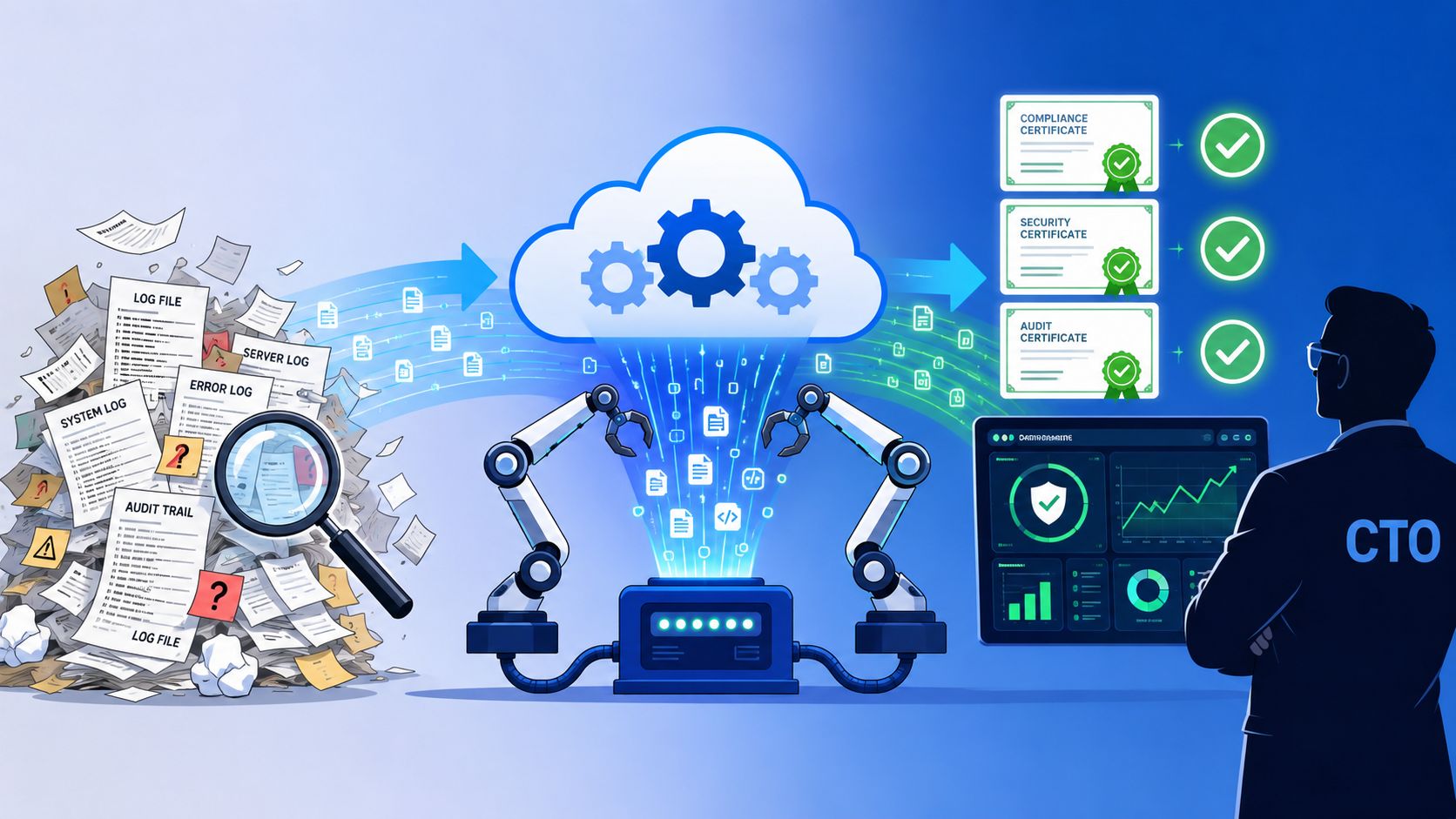

An audit shows up on the calendar, and a normal sprint turns into evidence collection. One engineer exports IAM settings from AWS. Another digs through GitHub for approval history. Someone pulls CI deployment logs. A staff engineer ends up stitching screenshots into a document nobody wants to maintain.
Teams accept this too quickly as the price of selling to larger customers or operating in regulated markets. The underlying problem sits lower in the stack. Compliance reporting is an output of how the platform captures changes, access, approvals, and operational events.
That shift is critical, as compliance reporting has grown heavier operationally. If the process still depends on manual exports, scattered tools, and tribal knowledge, every new requirement turns into more DevOps work for engineers who should be shipping product.
I have seen the same pattern repeatedly. A company starts with a few scripts, a shared folder, and good intentions. Then the control set expands, auditors ask for repeatable evidence instead of screenshots, and the homegrown process becomes its own maintenance burden. What looked cheaper than buying a platform turns into ongoing toil across cloud infrastructure, identity, CI/CD, ticketing, and policy records.
The practical fix is to treat reporting as a platform capability. Teams that invest in developer platform automation for compliance-heavy workflows collect evidence as part of delivery, not as a separate project before every review. That is how compliance stops interrupting engineering and starts behaving like a system.
The Audit Fire Drill You Can Actually Avoid
A familiar scene plays out a few weeks before an audit or customer security review.
Your product team has a release in flight. Then the requests start. Show who can access production. Prove changes to infrastructure were approved. Provide evidence that backups ran. Export security events. Demonstrate that leavers lost access when they should have. Suddenly your strongest engineers are doing clerical reconstruction across AWS, Azure, GCP, GitHub, Jira, Slack, and whatever home-grown scripts the last platform engineer left behind.
What the fire drill really costs
The visible cost is delay. Features slip because engineers stop building.
The less visible cost is quality. Under pressure, teams grab screenshots instead of durable records. They export logs without preserving context. They answer an auditor's question with a one-off manual report that can't be reproduced next month. Even when everyone acts in good faith, the process produces brittle evidence.
Practical rule: If evidence only exists because someone remembered to collect it, your system isn't audit-ready.
That's the core mistake. Teams frame compliance reporting as a last-mile GRC task when it is instead an output of how the delivery platform is designed. If your platform captures changes, permissions, approvals, deployments, and policy decisions as part of day-to-day work, reporting becomes retrieval. If it doesn't, reporting becomes archaeology.
The better framing
The engineering answer isn't “hire more people to chase evidence”. It's to make evidence generation a side effect of normal operations.
That means:
- Capturing events at source so access changes, deploys, and config updates leave records automatically
- Standardising records so AWS logs, CI events, and ticket data can be read together
- Making reports reproducible instead of custom-built for each audit request
- Reducing bespoke tooling that only one engineer understands
Teams building an internal platform usually discover this late. They start with deployment speed, then bolt on logging, then add access controls, then realise reporting still lives in spreadsheets. A more durable approach is to treat auditability as part of the platform contract from day one. That's the core value of developer platform automation. It turns compliance reporting from a recurring interruption into a routine system capability.
What Is Compliance Reporting Really
A CTO usually learns what compliance reporting really is at the worst possible moment. An auditor asks for proof of production access changes over the last quarter, evidence that high-risk changes were approved, and a record of how exceptions were handled. The policies exist. The controls may even exist. What breaks is the retrieval path.
Compliance reporting is the operating record of your system. It shows what happened, who did it, when it changed, what was approved, what failed, and how the team responded. If that record has to be rebuilt by hand from exports, screenshots, and Slack threads, the problem is not reporting discipline. The problem is platform design.
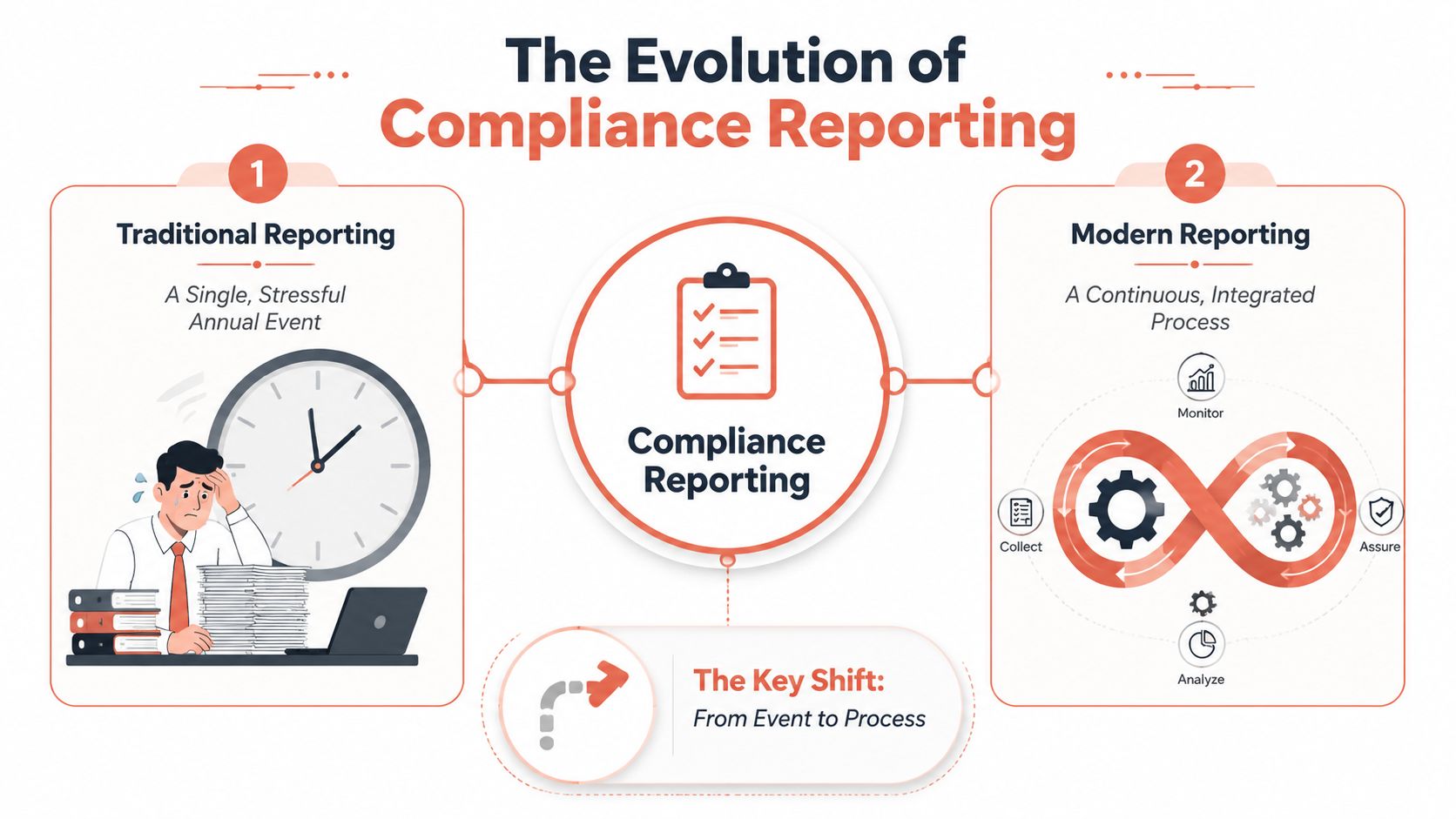
Reporting is evidence, not policy
Compliance management defines the controls. Compliance reporting proves those controls operated in practice.
That distinction matters because auditors do not certify intent. They review evidence. A team can have a clean access policy and still fail the reporting test if nobody can show who granted a role, whether approval happened first, or how long the access remained in place. In practice, the evidence chain carries more operational weight than the policy document.
This is one reason compliance reporting belongs closer to DevOps than to static GRC administration. The useful artifacts already live in operational systems. IAM events, CI logs, ticket history, pull request approvals, deployment records, vulnerability scans, and alert timelines. The reporting job is to collect those records consistently, preserve context, and make them reproducible on demand.
The same evidence keeps showing up across frameworks
SOC 2, ISO 27001, HIPAA, and GDPR use different language, but engineering teams keep getting asked for the same classes of proof:
Access control
Who can reach production systems, admin tooling, secrets, data stores, and support environments.Change management
What changed, who reviewed it, how it moved to production, and whether the change maps back to code, tickets, and approvals.Security monitoring
Which events are logged, how alerts are triaged, and how incidents are documented through resolution.Data handling
Where sensitive data sits, who can touch it, how retention works, and what deletion or disclosure actions were taken.Third-party oversight
Which vendors are in scope, what assurances they provide, and how their activity ties back to your controls.
That repeatability is useful. It means compliance reporting should be built as a shared evidence pipeline, not as a separate project for each framework. Teams that miss this point usually end up with framework-specific folders and one-off exports. Teams that get it build a platform-level record of operational truth.
The same principle shows up in other automation-heavy back-office work. Finance teams that reduce invoice errors do not fix the problem with better spreadsheets. They standardise data capture at the source and remove manual re-entry. Compliance reporting works the same way.
Good reporting is a systems property
Strong compliance reporting starts with clean telemetry, stable ownership, and records that survive staff turnover. It also requires trade-offs. Capturing more evidence creates storage costs, retention decisions, and access questions of its own. Normalising data across cloud platforms, CI systems, ticketing tools, and identity providers takes engineering effort. DIY setups can cover the basics for a while, but they tend to degrade into brittle scripts and manual reconciliation.
A solid platform changes the economics. When evidence collection is built into the delivery path, reporting stops being a quarterly scramble and becomes a retrieval problem with clear provenance. That is the difference between a compliance checklist and a compliance machine.
The Hidden Costs of DIY Compliance Evidence Collection
Most CTOs don't set out to build a compliance reporting system. They accumulate one.
It starts innocently. A script pulls CloudTrail data for access reviews. Another script exports GitHub branch protection settings. Someone adds a scheduled job to collect vulnerability scan results. A compliance folder appears in a shared drive. Six months later, your reporting process depends on fragments spread across shell scripts, CI jobs, notebooks, exports, and manual copy-paste work.
Why DIY feels cheaper than it is
On paper, the DIY path looks pragmatic. The team already has cloud accounts, CI pipelines, log storage, and people who can write automation. So why buy or adopt a more integrated platform approach?
Because the first version is never the actual cost. The actual cost arrives in maintenance.
- APIs drift and your exporter breaks without warning.
- Schemas change and fields no longer map cleanly into reports.
- Ownership blurs when the engineer who wrote the job moves teams.
- Exceptions multiply because each business unit stores evidence differently.
- Audit requests become bespoke because nobody trusts the same report twice.
That's where compliance reporting starts eating product capacity. Not in the first script. In the permanent support burden of twenty scripts plus the manual reconciliation around them.
The spreadsheet problem is a systems problem
The worst part of DIY evidence collection isn't even the scripting. It's the handoff into spreadsheets and shared documents where people try to reconcile outputs from incompatible systems.
One export lists user IDs. Another lists emails. A third lists team names that don't match either. Someone manually decides they all refer to the same person. Someone else re-labels cloud accounts to fit the auditor's request. At that moment, your reporting process stops being a system of record and becomes a chain of human interpretation.
This is the same reason finance teams automate document-heavy workflows to reduce invoice errors. Once people spend their days keying, matching, and reformatting operational data, mistakes creep in at the joins, not the source. Compliance evidence has the same failure mode.
Build enough one-off evidence scripts and you haven't built a system. You've built future rework.
The opportunity cost is the real bill
Engineering leaders often underestimate this because the effort is distributed. No single sprint says “compliance reporting rebuild”. Instead, a release engineer loses half a day chasing logs. A platform engineer spends Friday fixing an exporter. A security lead rewrites a control mapping in a spreadsheet. A manager reviews evidence packs instead of roadmap work.
The result is familiar:
- Senior engineers become report assemblers when they should be solving delivery or reliability issues
- Platform work turns reactive because audit demand dictates priorities
- Compliance stays fragile because every request is recreated from scratch
- Teams overhire around operational pain rather than removing the pain at source
The hard truth is that DIY DevOps for compliance often recreates the same fragmentation teams were trying to escape in the first place. You don't win by collecting more data. You win by collecting the right evidence once, in a form the whole organisation can trust.
A Better Way Automated Evidence Collection and Reporting
A workable compliance reporting system has one job. It must turn routine engineering activity into reliable evidence without asking engineers to stop and narrate what they already did.
That requires architecture, not heroics.
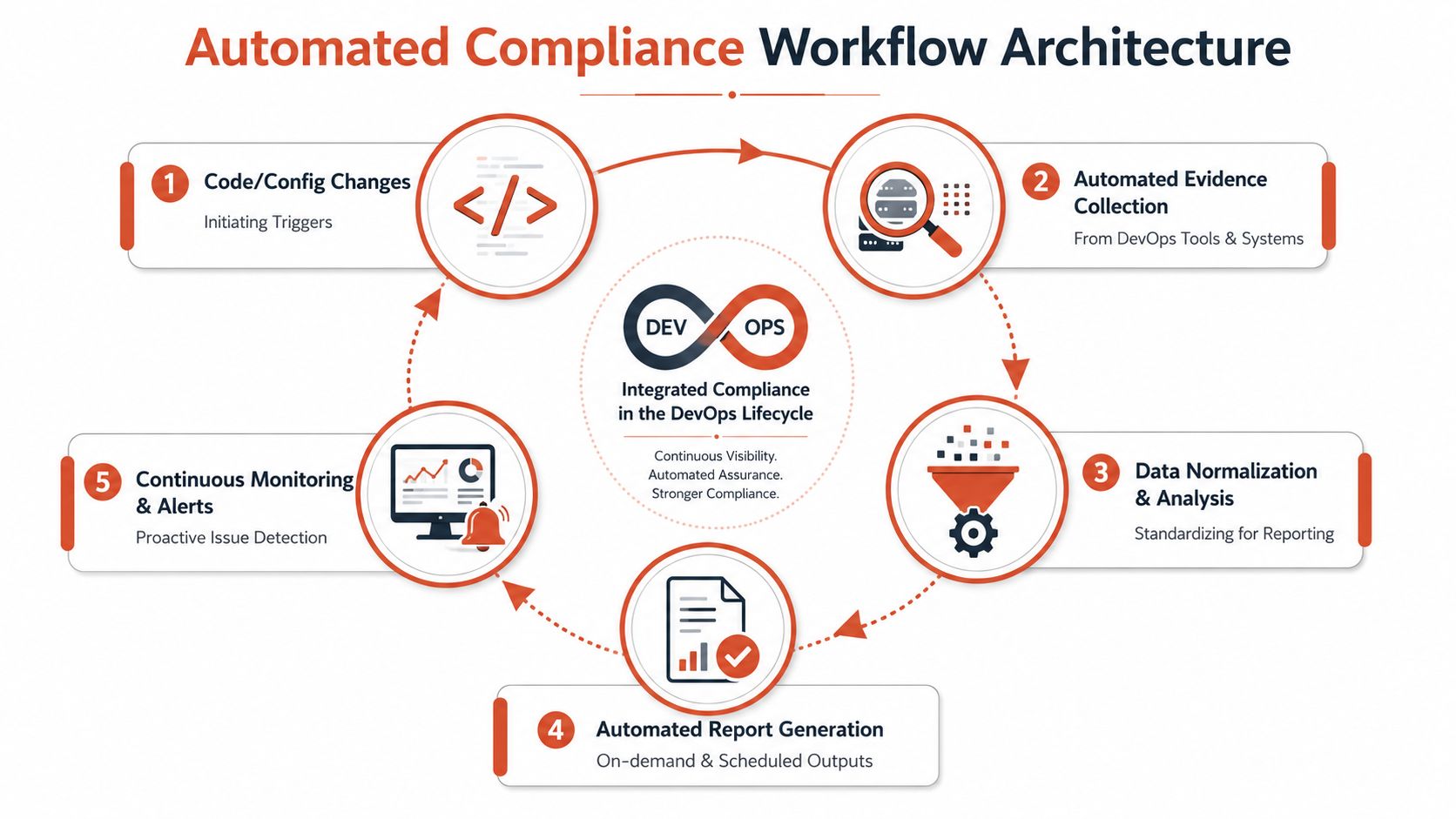
Start with one evidence model
The most common technical failure in compliance reporting is source-data fragmentation. When logs and events aren't normalised into a single, consistent model, downstream reports inherit gaps and mismatches. A standardisation layer with fixed templates and transformation rules is the most effective way to reduce the manual reconciliation where most errors are introduced, as explained in PuppyGraph's compliance analytics guidance.
In practice, that means you need one evidence schema that can absorb inputs from:
- AWS CloudTrail, Azure Activity Log, and GCP audit logs
- GitHub, GitLab, or Bitbucket events
- CI/CD systems such as GitHub Actions, GitLab CI, or CircleCI
- IAM systems and SSO providers
- Ticketing systems like Jira
- Security tooling, vulnerability scanners, and incident trackers
Each source can stay where it is operationally. What matters is that reporting doesn't depend on each source having its own naming, timing, and control language.
Collect evidence at the event source
The best reporting pipelines don't ask people to upload proof after the fact. They collect evidence when the event happens.
That usually includes:
- Code and config changes recorded through version control events
- Deployment actions captured by the release system
- Access changes emitted by IAM, RBAC, and SSO layers
- Policy decisions logged when controls allow, deny, or flag actions
- Operational incidents tied back to alerts, services, and owners
A lot of teams get this half right. They log the event, but they don't preserve enough metadata. For reporting, a raw event isn't enough. You need actor, timestamp, target system, environment, approval state, and control context. Without those fields, the report still needs a human to interpret what happened.
Make auditability part of infrastructure design
Platform thinking is essential. If every team invents its own labels, environments, and deployment conventions, evidence normalisation becomes a permanent clean-up job. If infrastructure is defined consistently and managed through a shared operating model, reporting becomes much simpler.
A useful mental model comes from understanding report automation architectures, especially the idea that reliable reporting depends less on pretty output and more on disciplined data pipelines underneath. Compliance reporting is no different. The report generator is the easy part. The hard part is the event model, the transformations, the retention rules, and the traceability.
That's also why infrastructure as code matters here. When the environment itself is versioned and reproducible, your evidence chain improves because changes to networking, permissions, policies, and runtime configuration can be tied back to reviewed definitions rather than undocumented console activity. A lot of teams begin that journey through patterns covered under infrastructure as code, but the compliance payoff only shows up when those definitions feed a unified evidence model.
If your auditors need screenshots from live consoles, your platform still has blind spots.
A good automated workflow makes those blind spots smaller every month. It doesn't promise zero manual effort. It removes the repetitive, error-prone work so people can focus on exceptions, not extraction.
Mapping Compliance Controls to Automated Evidence
The easiest way to make compliance reporting concrete is to map abstract controls to the operational artefacts that satisfy them. Here, many teams realise they aren't missing effort. They're missing structure.
A control rarely asks for a screenshot. It asks for proof that a process exists and that it operated consistently. Screenshots become a crutch when the system can't produce better evidence.
Manual vs automated compliance evidence
| Control Category | Example Control | Manual Evidence Collection (The Hard Way) | Automated Evidence Collection (The Platform Way) |
|---|---|---|---|
| SOC 2 | Logical access security | Export user lists from AWS IAM, cloud consoles, GitHub, and VPN tools. Take screenshots of role settings. Ask managers to confirm access in email threads. | Pull a current access report from unified RBAC and SSO records. Use immutable logs for role grants, removals, and review history. Show approvals and timestamps in one place. |
| SOC 2 | Change management | Gather pull requests, deployment screenshots, ticket IDs, and chat approvals manually. Match them by hand. | Link commits, pull requests, approvals, pipeline runs, and deployment events automatically through a single release record. |
| ISO 27001 | Asset and configuration control | Maintain a spreadsheet of systems in scope. Ask teams to update ownership and environment labels before review periods. | Generate live inventory from tagged infrastructure, repositories, services, and environments, with ownership and status derived from the platform. |
| ISO 27001 | Logging and monitoring | Export logs from separate monitoring and SIEM tools. Provide a narrative explaining retention and review practices. | Produce a report showing log sources, retention settings, alert coverage, and review activity from integrated observability and audit systems. |
| GDPR | Data access and handling | Ask application owners where personal data lives, who can access it, and how deletion requests are handled. | Tie services and data stores to access policies, retention settings, and workflow records so data handling evidence is queryable rather than anecdotal. |
| HIPAA | Security and incident oversight | Collect incident tickets, screenshots of access settings, policy documents, and point-in-time exports. | Use continuous records of access changes, incident timelines, policy enforcement, and system actions with timestamps and actor identity attached. |
What auditors usually want from engineering
The request behind most compliance reporting questions is surprisingly consistent. Auditors and customer security teams usually want to verify a few basic things:
Who did what
Identity, role, and actor attribution matter more than a screenshot of the current state.When it happened
Time-bounded evidence is far stronger than a static export with no lineage.Whether the action was authorised
Approval trails, policy gates, and exceptions need context.Whether the record can be trusted
Immutable logs beat manually assembled documents every time.
Where teams go wrong
Some teams overfocus on the document pack and underfocus on the evidence graph behind it. They polish reports while leaving the underlying records inconsistent.
Others automate too narrowly. They build a strong report for access reviews but leave deployment approvals manual. Or they log every infrastructure change but still manage exceptions in Slack messages and private DMs. The control then looks automated until someone asks about edge cases.
The control isn't automated if the exception path still lives in chat threads and tribal knowledge.
The most resilient setup is a layered one:
- Control definitions live in policy and code
- Operational events are captured automatically from systems of work
- Evidence records are normalised into a common model
- Reports are generated from that model, not assembled independently each time
Once you adopt that structure, compliance reporting stops feeling like a separate discipline. It becomes another consumer of your engineering system's operational truth.
Implementing Continuous Compliance with PushOps
Friday afternoon. A customer security review lands in the inbox, legal wants updated control evidence by Monday, and the engineering manager is already pulling access exports from three systems that disagree with each other. That is the point where a compliance program reveals what it really is. Either the platform already produces trustworthy evidence, or the team starts a manual recovery exercise.
Many teams buy point tools for reporting and still end up doing evidence assembly by hand. The harder problem sits lower in the stack. Identity, deployments, policy decisions, environment changes, and approvals need to come out of the same operating model if you want reporting to hold up under scrutiny.
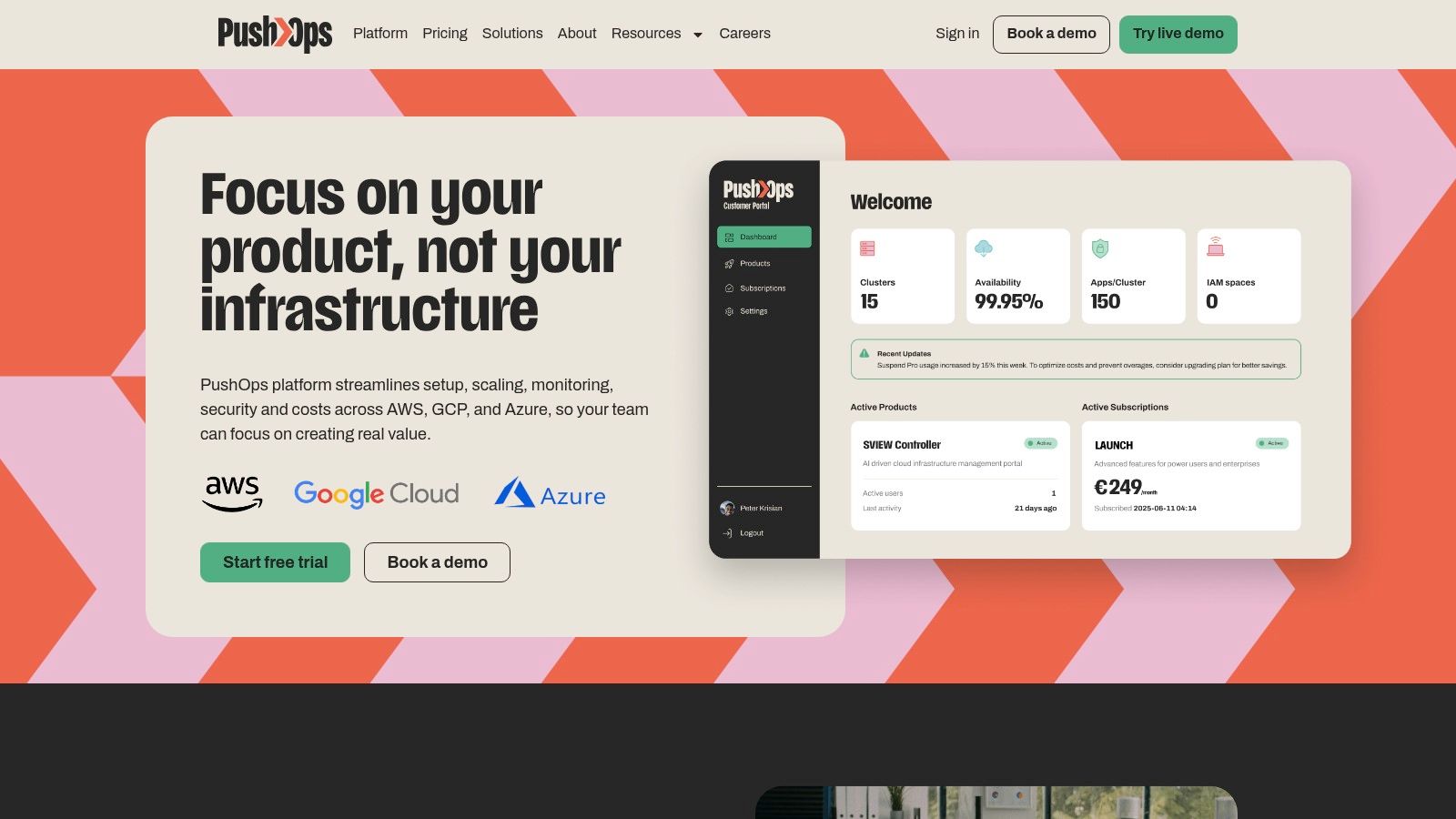
What continuous compliance looks like in practice
PushOps is useful here because it treats compliance reporting as a platform output, not a document exercise. The goal is simple. Engineers follow the normal path to ship, change access, and operate services, and the platform records the evidence as part of that work.
Four capabilities make that practical.
Role-based access control
Centralised RBAC gives you a durable record of who can do what across environments and operational actions. It also exposes one of the trade-offs that DIY setups hide. If access rules live partly in cloud IAM, partly in Kubernetes, and partly in ad hoc scripts, every review turns into reconciliation work. A single control can exist in five places and still be hard to prove.
Immutable audit logs
Audit logs need to capture the operational sequence, not just the final state. Code changes, deploy approvals, configuration edits, secrets access, and permission updates should all leave a tamper-resistant trail. That is what lets a team answer auditor questions with records instead of screenshots and Slack archaeology.
Policy enforcement
Good reporting starts with constrained workflows. If production deploys require the right role, if exceptions require approval, and if risky changes trigger policy checks before execution, the platform reduces both control drift and evidence gaps. You spend less time proving people followed process because the process is already enforced in the path they use.
Built-in evidence collection
Continuous evidence collection removes the quarterly scramble. The useful pattern is to collect records at the moment work happens, normalise them, and make them queryable by control, environment, service, or actor. That changes the audit experience from “please rebuild the last six months” to “pull the record set.”
Why this matters for engineering leaders
The payoff is not cleaner reporting alone. It is fewer engineering hours spent maintaining homegrown compliance plumbing that never becomes a product advantage.
I have seen teams build their own layer for evidence capture on top of Kubernetes, cloud accounts, CI/CD, ticketing, and chat approvals. It works at first. Then exceptions pile up, schema drift starts, one team bypasses the happy path for an urgent fix, and the internal platform team becomes the reporting support desk every audit cycle. DIY looks cheaper until you price in maintenance, reconciliation, and the opportunity cost of senior engineers babysitting controls.
For teams that want that baseline built into the way infrastructure is provisioned and operated, PushOps for ISO-aligned cloud infrastructure is a good reference point. When environments, permissions, deployments, logs, and policy checks are standardised at the platform level, compliance reporting stops competing with delivery work. It becomes a byproduct of running engineering on paved roads.
Your Checklist for Sustainable Compliance Reporting
Sustainable compliance reporting doesn't come from a heroic audit month. It comes from a steady operating model that engineers can live with all year.
The checklist is simple. The discipline is not.
The operating checklist
Treat controls as implementation details, not slideware
If a control matters, encode it in infrastructure, deployment workflows, access rules, or policy logic.Collect evidence where events originate
Don't ask people to reconstruct deploys, access changes, or approvals after the fact.Normalise data before reporting
One evidence model beats ten exports joined by hand.Prefer immutable logs over screenshots
Screenshots show a moment. Logs show sequence, actor, and history.Design for exceptions
Auditors often learn more from exception handling than happy-path automation. Make approvals, overrides, and escalations visible.Keep developers inside paved roads
Self-service works best when the default path is already secure, observable, and reportable.
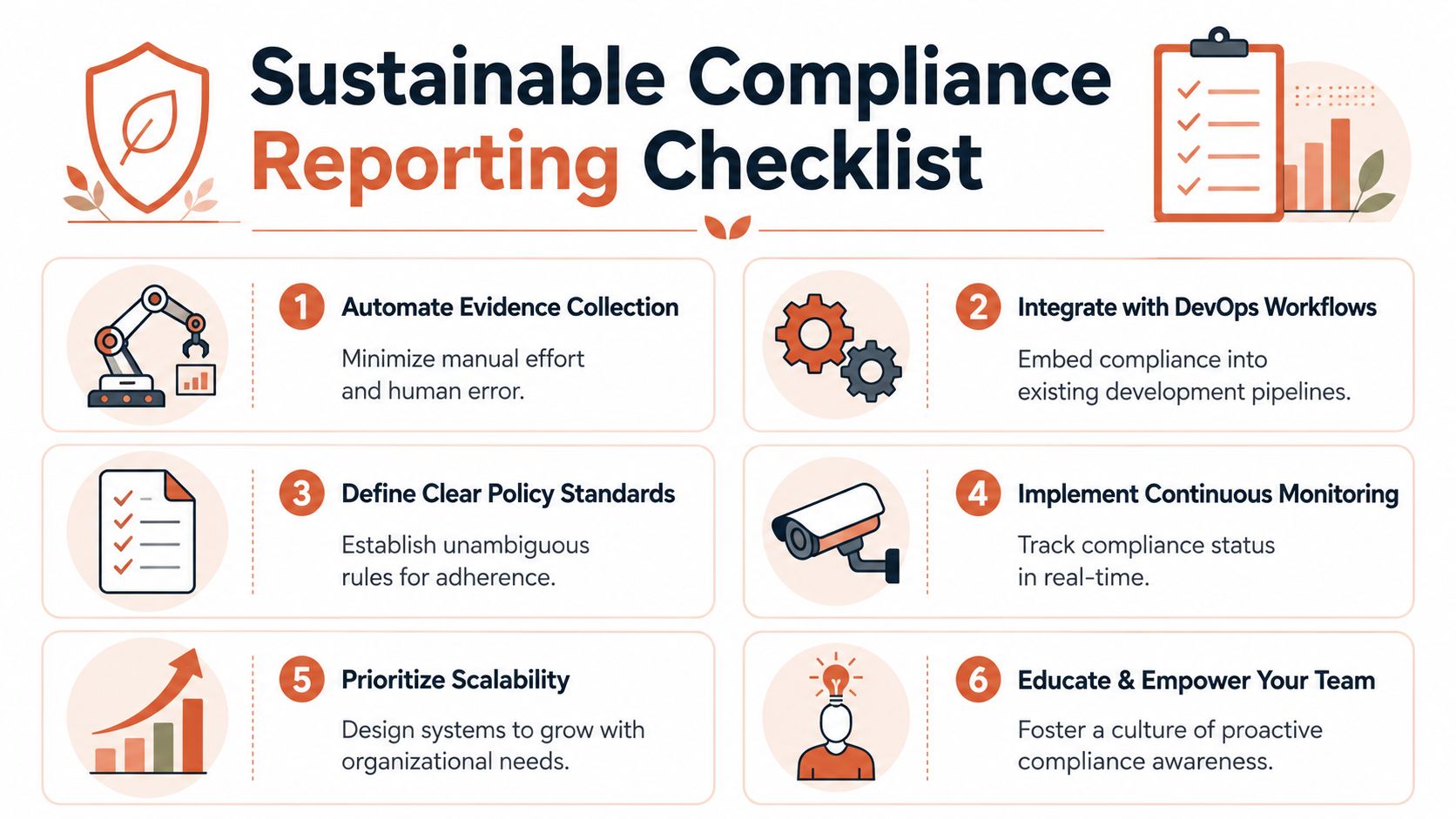
Compliance reporting gets easier when engineers don't have to think about it constantly. The platform should carry most of that load.
If your current process depends on engineers leaving product work to assemble evidence manually, the issue isn't team discipline. It's architecture. Build the compliance machine once, run it continuously, and let reporting become a routine output instead of a recurring interruption.
PushOps helps software teams replace fragile DIY DevOps stacks with a production-ready platform across AWS, GCP, and Azure. If you want compliance reporting, audit logs, access control, deployments, observability, and policy enforcement to work as part of one operating system instead of six stitched-together tools, take a look at PushOps.

