
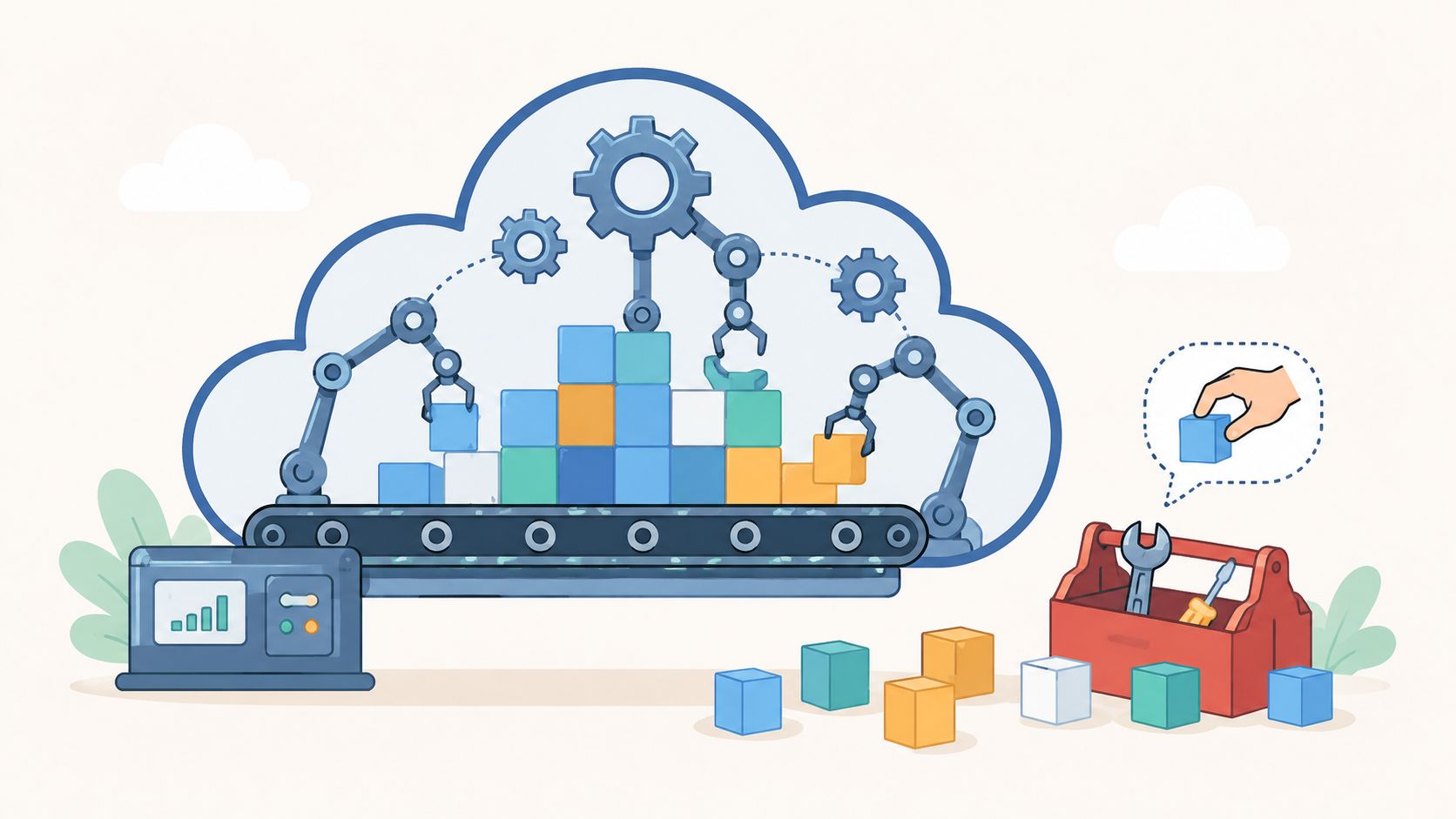
You're probably already living this. A production issue lands at 2am, someone SSHs into a box to “just fix one thing”, and by morning nobody can say with confidence what changed, which environment still matches production, or whether rollback is clean. The page was never really about the incident. It was about the operating model that made the incident inevitable.
That's the trap with infrastructure that's managed by hand. The work looks tactical in the moment, then it compounds into a permanent tax on your best engineers. Declarative infrastructure is the point where teams stop treating infrastructure like a set of instructions to babysit and start treating it like a versioned system that can reconcile itself back to the intended state.
The 2am Page That Started This Conversation
At 2am, the senior engineer isn't debugging code. They're untangling someone else's shortcut. A quick console change in production drifted the cluster away from staging, an old value survived a rollback, and now the team is reading logs to reconstruct a change nobody formally reviewed.
That's the cost of imperative infrastructure. Every manual step creates a branch of reality that only exists in somebody's head. Once the people who remember the sequence are asleep, the team is left with guesswork, pressure, and a half-working rollback plan.
Practical rule: if your recovery plan depends on whoever last touched the system being awake, your platform is already too manual.
The worst part is that the senior people pay the price most often. They become the human reconciliation loop, the fallback for every drift event, every failed deploy, every environment mismatch. That is not platform work, it's operational debt wearing a platform badge.
For teams in Europe, Singapore, the UK, and the US, this usually shows up the same way. Product work slows, infrastructure knowledge gets trapped in a few heads, and the same midnight fixes keep happening because the system still accepts silent manual change. If you recognise that pattern, you're not looking for more heroic engineers. You're looking for a model that makes heroics unnecessary.
What Declarative Infrastructure Actually Means
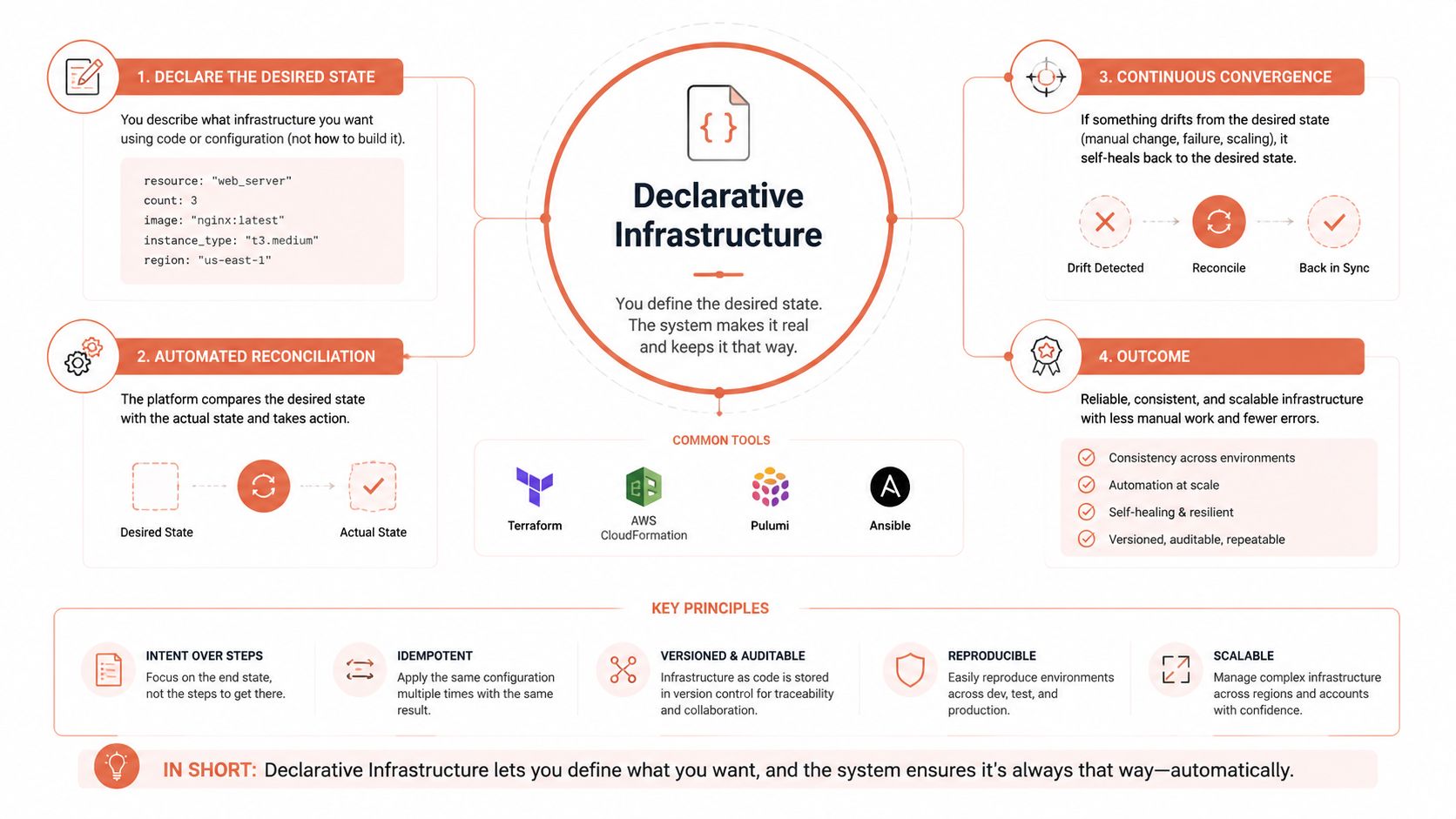
A coffee shop is easier to run when the manager writes down the outcome they want, not every finger movement of the barista. “Three flat whites, one decaf, stock the milk fridge, open at 8” is the right level of intent. Declarative infrastructure works the same way, you describe the desired end state, then a tool figures out the steps needed to make reality match it. That's the core distinction from imperative infrastructure, which says, “do this, then this, then this.”
In practice, that intent lives in machine-readable files, often YAML or JSON, and the files are kept in Git so the team can review, version, and audit them. That makes Git the source of truth, not the cloud console. The system then compares live state with declared state and corrects drift automatically, which is the reconciliation loop at the heart of the model, as described in declarative infrastructure basics.
What you declare, and what you stop doing
You don't tell the system how to create a load balancer line by line. You declare that the load balancer should exist, which subnets it should attach to, which policies should apply, and what the final state should look like. The tool does the orchestration.
That matters because the team stops depending on tribal knowledge. A new engineer can read the repo, understand the intended architecture, and reason about changes without spelunking through console history. If you want a broader starting point, the Infrastructure as Code overview is a useful companion view.
Declare the outcome, not the dance steps. The fewer operational steps humans perform by hand, the less drift you buy later.
Declarative vs Imperative Infrastructure in Practice
The difference looks small until you operate at scale. Imperative infrastructure behaves like a recipe, and declarative infrastructure behaves like a blueprint. One is sequence-heavy, the other is state-driven.
| Dimension | Imperative | Declarative |
|---|---|---|
| Change style | Step by step commands | Desired state in config |
| Repeatability | Depends on exact execution | Built for repeatability |
| Drift handling | Manual cleanup | Automated reconciliation |
| Rollback | Re-run old steps or reverse them | Revert the commit or config |
| Failure mode | Human context disappears | State is visible in code |
A simple imperative flow might read like this, “create the network, then the subnet, then the route table, then the instance, then attach the policy.” The declarative version says, “this environment should have this network shape, these policies, and these workloads.” The tool handles ordering, dependency resolution, and correction.
That gives you reproducibility, because the same config should produce the same environment. It gives you idempotency, because applying the same desired state again shouldn't keep changing things. It helps drift detection, because the system can compare live reality to the repo. And it improves rollback behaviour, because reverting the code gives you a known previous state rather than a pile of remembered console clicks.
Imperative still wins in a few places. Bootstrapping the very first environment can require a manual step, especially when there's no cluster or controller yet. Emergency hotfixes are often faster when you need one surgical move. Legacy systems without a clean API also push you back toward scripts and human intervention.
For the decision-makers reading this, that's the useful truth. Declarative infrastructure is not a religion. It's the default when you want repeatability and control, and imperative is the exception when the system doesn't give you a clean control surface.
How GitOps Reconciliation Works in a Real Stack
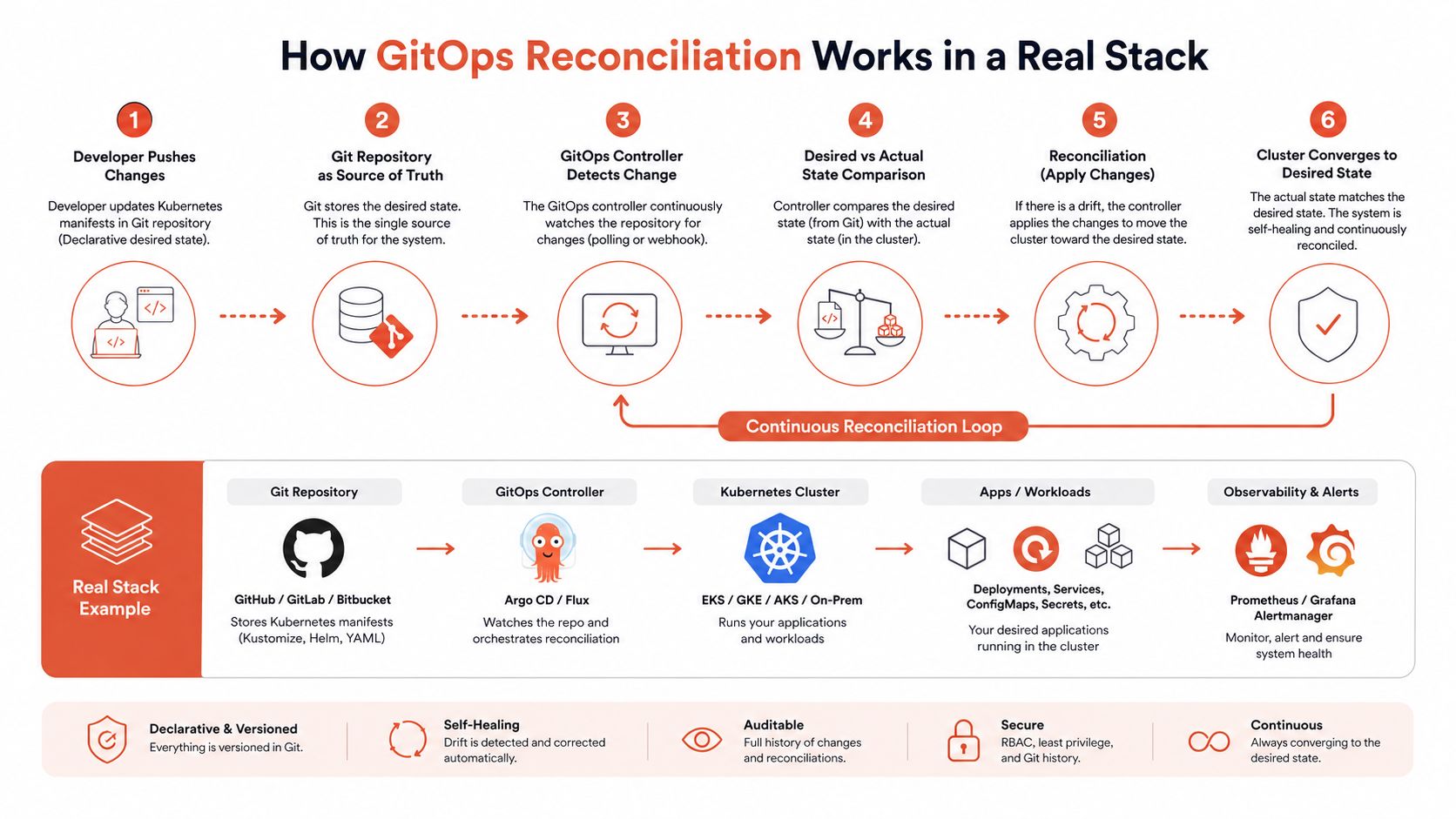
GitOps turns declarative infrastructure from a file format into an operating loop. A developer opens a pull request against a config repo, CI validates the change, and an agent in the cluster watches both Git and the live environment. If the two diverge, the controller nudges the system back toward the declared state.
That loop is why the model scales better than a pile of console changes. Every update goes through review before it reaches production, which makes audits easier and handovers less painful. If you need a practical comparison with older delivery models, the GitOps versus traditional CI/CD explainer is a useful reference point.
Why the loop matters even when things are calm
New environments become easier to spin up because they come from the same source of truth as production. Onboarding gets cleaner because a developer can see the same configuration patterns the platform uses everywhere else. Rollbacks also become predictable, since reverting a commit is simpler than reconstructing a chain of console actions.
The hidden win is that the loop exposes the cost of manual operations. If someone changes the live system outside Git, reconciliation makes that gap visible. If your team has ever said “it worked in staging but not in prod”, you already know why that matters.
Operational truth: drift is never just a technical issue. It's usually a process issue that the platform lets linger for too long.
The Tooling Landscape by Job to Be Done
Many teams don't need a 20-tool shopping list. They need a map of jobs, then a clear answer about how much of the platform they want to own.
For provisioning cloud foundations, the common names are Terraform, OpenTofu, Pulumi, and CloudFormation. They're strong at declaring networks, compute, and core services, but they still expect your team to wire up workflow, policy, secrets handling, and approvals around them. If you want a deeper lens on the platform angle, the DevOps cloud infrastructure platform overview is worth reading.
For workloads inside Kubernetes, Helm, Argo CD, and Flux usually sit in the centre. They're good at packaging and reconciling app deployments, but they don't magically solve governance, cost control, or multi-cloud consistency. For that, teams usually add policy tools like OPA, Kyverno, and Sentinel. These help enforce guardrails, but they still need operating discipline and good review habits.
The higher up the stack you go, the more glue you own. Crossplane and Backstage can help stitch platform layers together, while managed platforms reduce the amount of custom code and maintenance you take on. That's where the real staffing decision shows up, because every layer you assemble yourself becomes something you patch, monitor, and explain during incidents.
For teams thinking about machine learning infrastructure as well as app delivery, the MLOps guide for leaders from Ryware is a useful adjacent read. The same pattern appears there too, teams can either assemble a platform from parts or adopt one that already handles most of the operational burden.
Choose tooling by the job, not by the hype cycle. The real question is how much platform you want to operate after the demo ends.
Where the Declarative Model Genuinely Falls Short
Declarative infrastructure is strong, but it isn't magic. The first failure mode is bootstrapping. You usually need an imperative step to create the first cluster, the first vault, or the first controller before declarative management can take over.
The second problem is secrets and credentials. You don't want sensitive material sprawled across Git, and you don't want a careless pattern that turns your repo into a liability. Most serious teams use external secret stores, encrypted workflows, or sealed patterns so the config stays reviewable without exposing what shouldn't be exposed.
The third issue is legacy workloads. If a system doesn't expose a usable API, the reconciler can't manage it cleanly. In those cases, teams often wrap the old system with scripts, or isolate it until the application layer can be modernised. The fourth issue is the state file. If a Terraform team ignores remote backends and locking, state becomes a brittle dependency that can hurt recovery and collaboration.
If you're evaluating adjacent infrastructure choices, the choosing a vector database guide is a good reminder that platform decisions always have hidden operational edges. The same is true here, the right abstraction still needs the right controls around it.
The practical answer is not to abandon the declarative model. It's to apply it where it's strong, then design around the gaps instead of pretending they don't exist. That usually means separating bootstrap from steady-state management, handling secrets outside the repo, and refusing to let state live in a fragile local workflow.
Build Your Own Stack or Adopt a Managed Platform
If you build this yourself, you are not just buying tooling. You're hiring for the ongoing work of keeping Kubernetes, CI/CD glue, observability, security, and cost controls alive. That means patching, upgrading, writing internal docs, maintaining on-call coverage, and absorbing every integration that breaks when one vendor changes behaviour.
That is why the staffing question matters more than the syntax question. A team that spends its best people assembling platform pieces is a team that ships product slower. The cost is not only salary, it's the drag of context switching, incident response, and permanent maintenance.
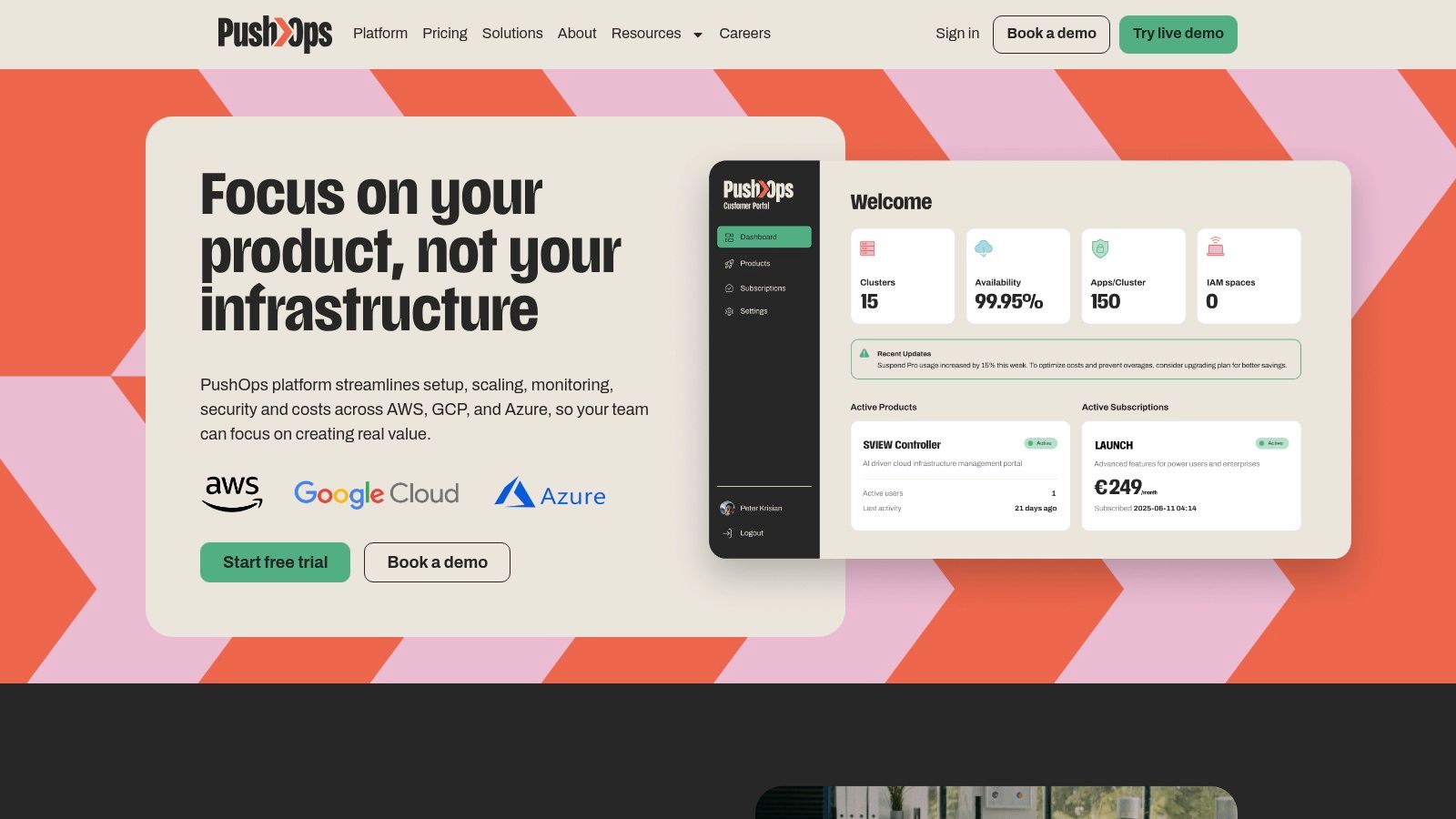
A managed multi-cloud DevOps platform changes the equation. PushOps, for example, provisions production-ready foundations on AWS, GCP, and Azure, automates builds and deployments, adds integrated observability, enforces security by default, and supports smarter scheduling and autoscaling for cloud cost control. That doesn't remove engineering judgement, but it does remove a large amount of day-two work from your internal team.
Here's the leadership test. If your organisation wants a platform team as a product in its own right, build more of it in-house. If your real goal is a reliable production platform so engineers can spend time shipping features, adopt the parts that are already commoditised. Declarative infrastructure still matters either way, but you should be honest about whether your team wants to own the machinery or just use it.
Rule of thumb: if the platform work is becoming a product, treat it like one. If it's a support burden, stop pretending it's strategic.
A Practical Starting Point for This Quarter
Start with one environment, not the whole estate. Pick a single source of truth, usually a Git repo, and write down the desired state for one service in plain language before you add any new tooling. Then decide, in the next planning meeting, whether you're building the platform or buying one.
Your first three moves should be boring and specific. Write a one-page desired-state spec. Set up drift detection for production. Budget for either one platform engineer or one platform subscription next year, but don't keep pretending the work is free.
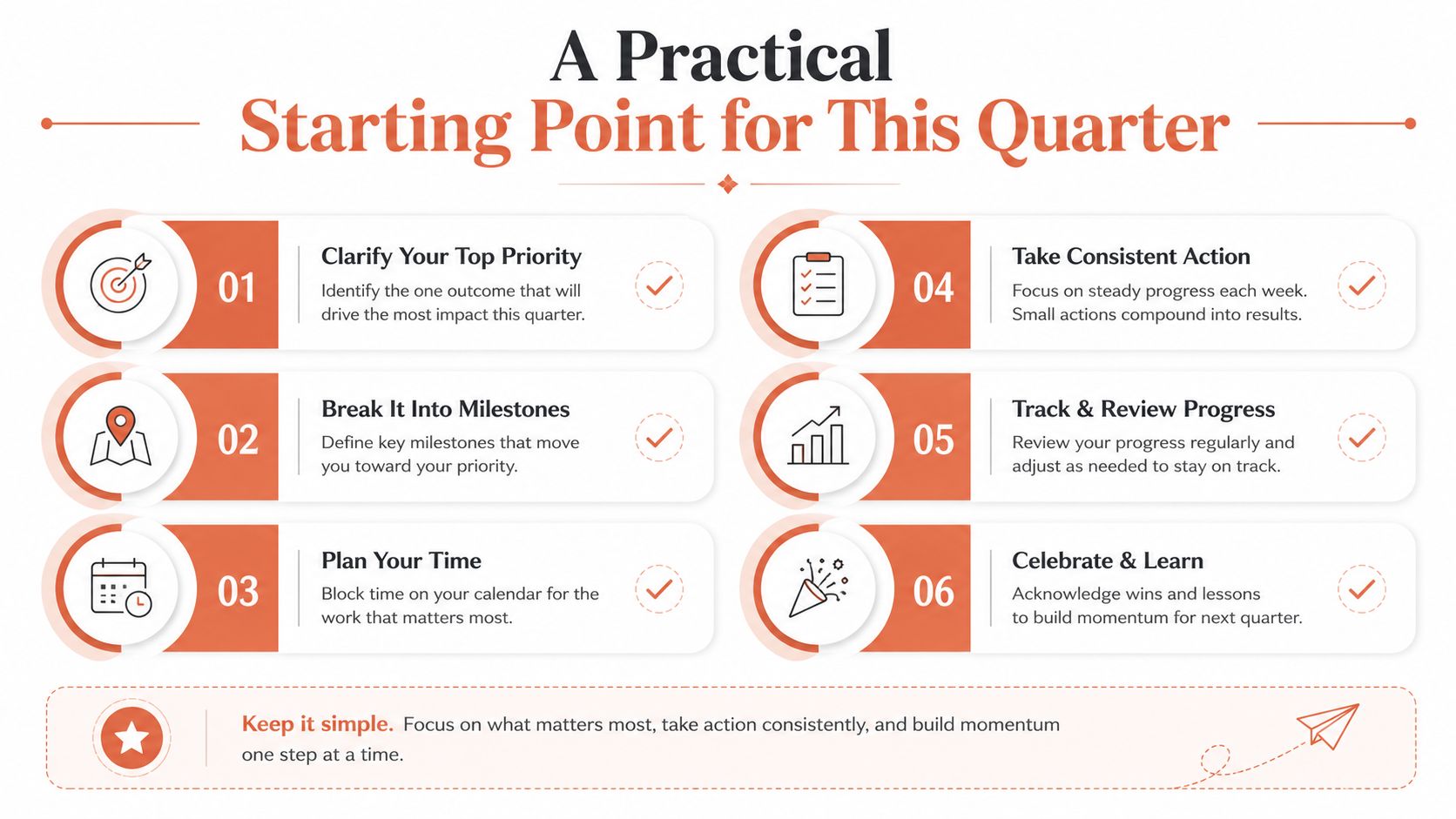
If you get those basics right, the rest becomes a staffing and operating model decision, not a midnight firefight.
PushOps gives teams a managed way to run production-ready cloud foundations, deployments, observability, and security without building the whole stack themselves. If you want declarative infrastructure to support shipping, not consume your senior engineers, visit PushOps and see how a multi-cloud platform can take the operational weight off your team.

