
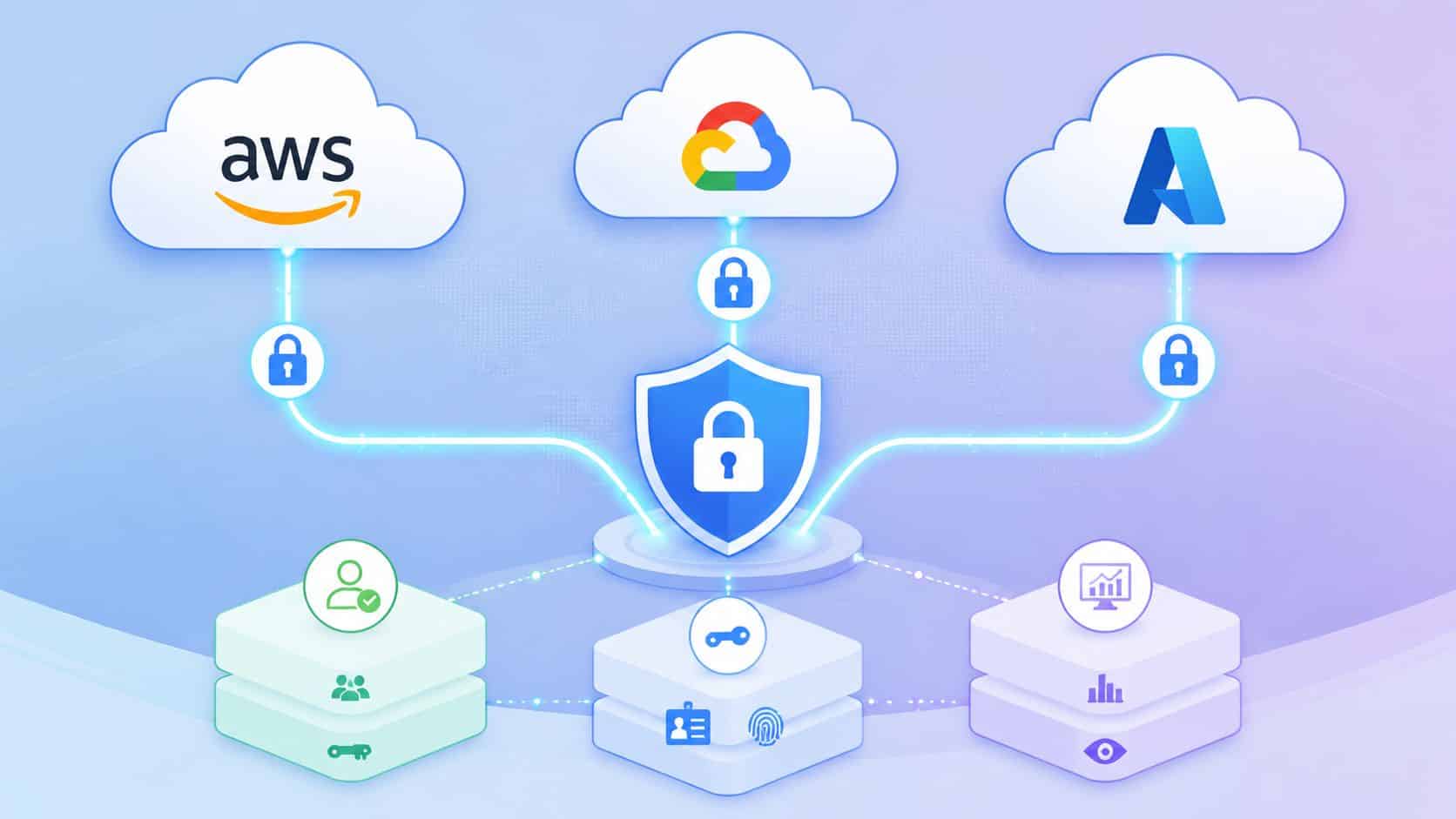

Most engineering leaders don't set out to become part-time network administrators. Yet that's where many startups and scale-ups end up. A product roadmap gets interrupted by firewall changes, VPN access requests, service-to-service policy debates, audit log gaps, and the familiar scramble after someone spots an overly broad security group or an exposed internal endpoint.
The frustrating part is that network security isn't optional, but building it well in-house drags senior engineers into work that doesn't differentiate the business. Every hour spent normalising IAM policy, stitching together cloud logs, or debugging broken ingress rules is an hour not spent shipping product. Teams often treat that trade-off as normal. It isn't. It's a sign that the operating model is wrong.
Why Network Security Is an Engineering Bottleneck
A lot of teams still approach network security as a set of tickets. Open a port. Restrict a subnet. Rotate credentials. Review a new vendor connection. Patch an image. Approve a production exception. Each task looks small on its own. Together, they create a steady tax on engineering time.
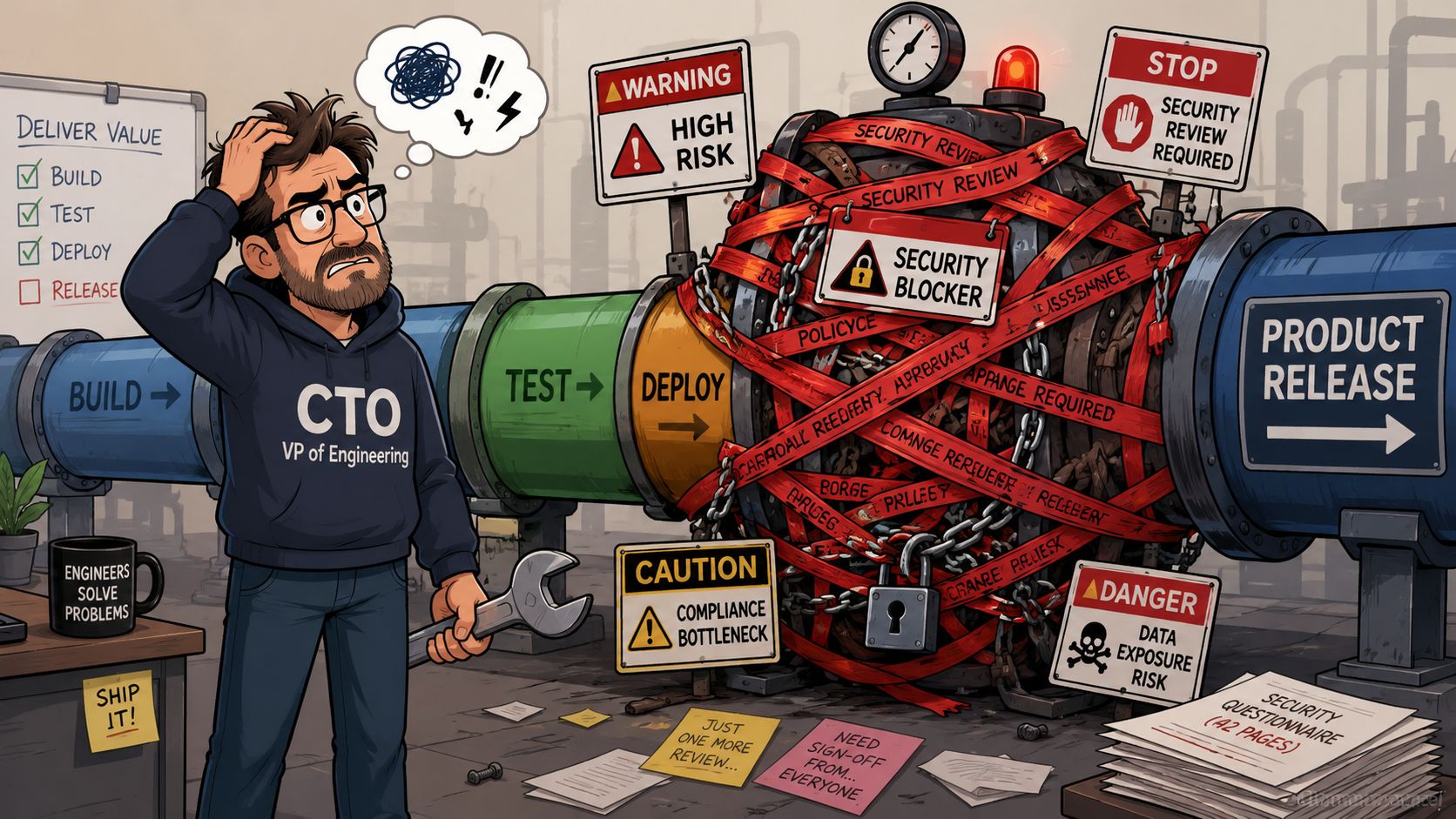
That tax gets worse when the team has built its own deployment workflows and cloud controls. Security isn't living in one place. It's spread across Kubernetes manifests, cloud account settings, CI/CD pipelines, Terraform modules, VPN configs, secret stores, monitoring tools, and whatever shell scripts survived the last on-call rotation. When deployment quality is already under pressure, the security layer adds another point of failure. That's why reducing operational friction in release processes matters just as much as hardening infrastructure, and why teams looking at ways to reduce deployment failures usually end up confronting their security architecture too.
Security work rarely stays contained
A single access change can touch multiple systems:
- Identity rules in the cloud provider
- Network paths between workloads and data stores
- Application configuration for service discovery or secrets
- Audit requirements so someone can prove who changed what
None of that is unusual. What hurts is the accumulation. Senior engineers become approval bottlenecks because they're the only people who understand the full chain.
Practical rule: If your most trusted engineers are spending their week translating security intent into tool-specific configuration, your platform isn't reducing risk. It's redistributing it.
DIY stacks create invisible queueing
The bottleneck isn't just complexity. It's queueing. Product teams wait for infra changes. Security reviews wait for context. Incident response waits for logs to be centralised. New environments wait for the same controls to be recreated by hand.
In early-stage companies, this often gets justified as temporary. Then the company scales, adds another cloud account, another region, another compliance requirement, and the temporary setup becomes permanent debt. The result is predictable: the business wants speed, the stack requires caution, and engineering leadership has to mediate the conflict every week.
The Core Components of Network Security
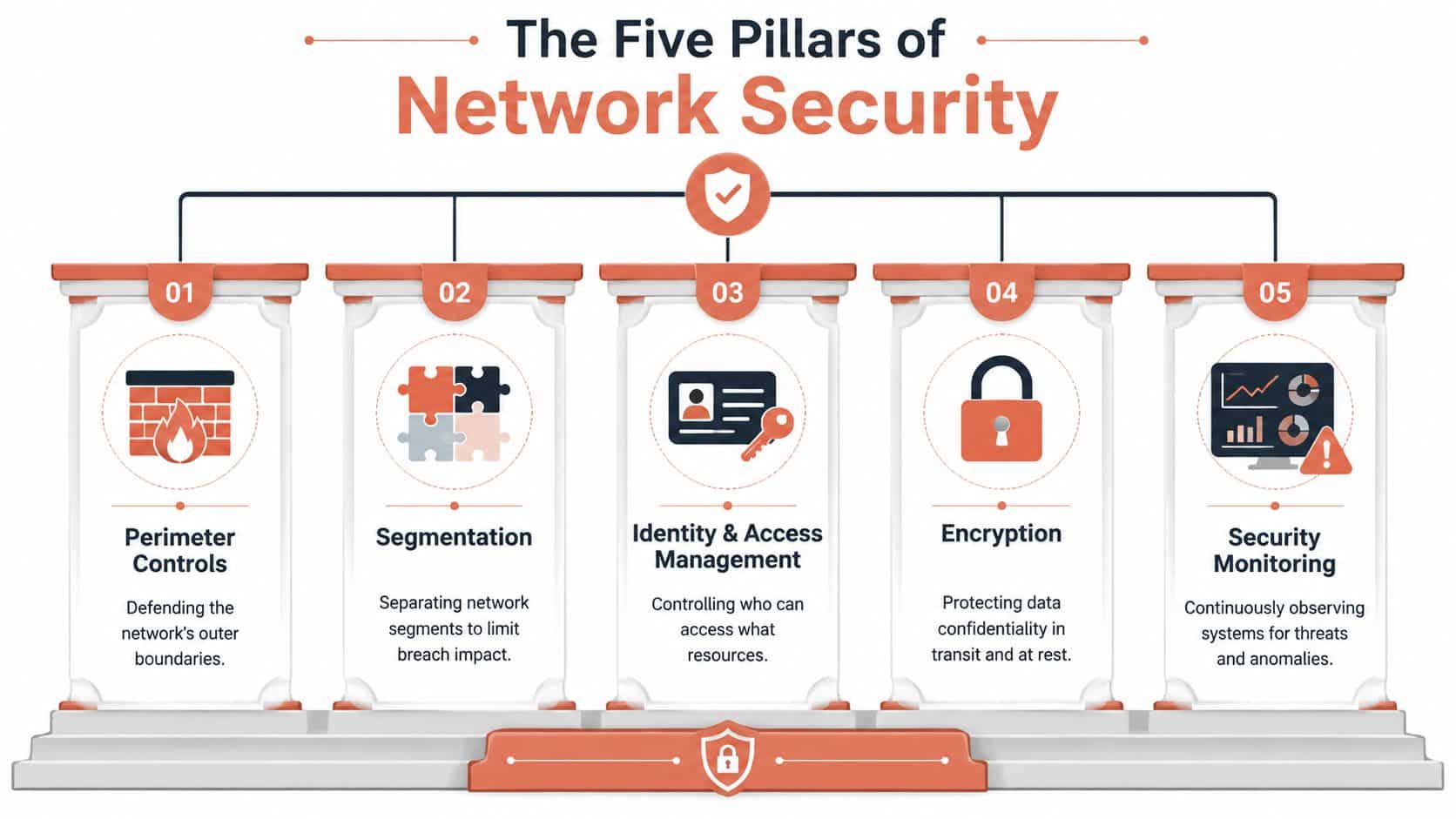
Network security becomes easier to reason about when you break it into a small number of operating concerns. In practice, these concerns typically coalesce around five pillars. The problem isn't understanding them at a conceptual level. The problem is implementing them consistently across real systems, under delivery pressure, without creating more maintenance than protection.
Perimeter controls
Perimeter controls are the first layer people think about. Firewalls, load balancers, web application filters, ingress rules, VPN gateways, and domain filtering all live here. Their job is simple in theory. Expose what must be public. Keep everything else private.
The operational catch is change management. Product teams add integrations, preview environments, partner traffic, admin tooling, and temporary exceptions. If every new path requires manual review and hand-tuned rules, perimeter controls become brittle. Teams either slow down, or they start approving exceptions they don't revisit.
Perimeter controls work best when they're opinionated and repeatable. They fail when they're customised one request at a time.
Segmentation
Segmentation limits blast radius. If one workload is compromised, it shouldn't have a free route to the rest of the environment. In cloud terms, that usually means careful separation between public and private resources, stricter east-west traffic rules, and clear network zoning between environments and services.
This is one of the first places DIY breaks down in multi-team environments. Segmentation isn't just a network diagram. It's ongoing enforcement across VPCs, subnets, routes, peering, private endpoints, service meshes, and workload policies.
Lithuania's national posture reflects that reality. Guidance referenced by Zero Networks on network security fundamentals notes the importance of segmentation, strong identity controls, and continuous monitoring, and it cites that three out of four attacks rely on valid credentials. That matters because once an attacker has a legitimate login, segmentation is what stops initial access from turning into lateral movement.
Identity and access management
IAM is where many teams lose control. It starts with good intentions. A few roles. A service account here. A temporary admin permission there. Then velocity wins, and permissions expand faster than they're reviewed.
Least privilege sounds straightforward until the team has to implement it across CI runners, developers, support staff, production services, and third-party tooling. Add MFA, federated login, emergency access, key rotation, and machine identities, and IAM stops being a policy document. It becomes a daily operations burden.
Valid credentials are often more dangerous than noisy exploits because they look normal in the logs until someone correlates behaviour across systems.
Encryption
Encryption protects data in transit and at rest, but its difficulty isn't the cryptography itself. The painful part is key management, certificate lifecycles, secret distribution, and deciding which systems can decrypt what.
A lot of teams technically have encryption enabled while still running a fragile process around certificates and secrets. That creates a false sense of maturity. If rotating a certificate risks downtime, or if application teams are passing secrets through CI variables with weak controls, encryption exists on paper more than in operations.
Monitoring
Monitoring is what turns controls into an actual security capability. Without logs, alerts, and an audit trail, teams can't tell whether a policy worked, whether a credential was abused, or whether a suspicious connection was expected.
For startup teams, monitoring often suffers because it's treated as a later-stage maturity problem. It isn't. It's the only way to understand whether the rest of the system is behaving the way you think it is.
A practical model looks like this:
| Pillar | What teams need | What usually goes wrong |
|---|---|---|
| Perimeter controls | Default-deny exposure and clear ingress paths | Rules grow through exceptions |
| Segmentation | Limited east-west movement | Flat internal networks |
| IAM | Least privilege and MFA | Permissions drift |
| Encryption | Safe key and secret handling | Manual certificate processes |
| Monitoring | Central visibility and audit logs | Logs split across tools |
Common Threats and the DIY Mitigation Trap
The usual threat categories aren't surprising. Credential theft, DDoS pressure, overly permissive cloud access, exposed services, and accidental misconfiguration are all familiar. What's more revealing is how teams respond when they don't have an integrated operating model. They buy another tool, add another script, or write another policy layer on top of an already fragmented stack.
That response feels responsible because action is visible. But it often makes network security harder to run.
The patchwork problem
A startup might begin with native cloud controls, then bolt on a VPN product, a secrets manager, a container scanner, a WAF, a SIEM, and a separate identity layer. The tools themselves are not the problem. The problem is the joins between them. Alerting logic differs. Ownership is unclear. One system says access is allowed, another says the route is blocked, and a third has the only useful audit trail.
In a smaller market, the volume of incidents is still enough to prove this isn't theoretical. The Lithuanian State Data Protection Inspectorate reported 674 personal data breach notifications in 2023, with 75 classified as unusual events and 14 confirmed as violations, according to Fortinet's summary of cybersecurity statistics. For engineering teams, the important lesson isn't just the count. It's the need to detect, classify, investigate, and report correctly when controls fail or staff make the wrong call.
Why reactive mitigation fails
Teams caught in the DIY mitigation trap usually show the same symptoms:
- They optimise for the latest incident. Last month's issue dictates this month's tool purchase.
- They spread control logic everywhere. Security policy lives partly in Terraform, partly in CI, partly in runbooks, and partly in someone's memory.
- They depend on a few specialists. If two people are away, nobody wants to touch production access rules.
- They underinvest in operability. Detection, logging, and investigation are weaker than prevention.
The hard part of network security isn't adding controls. It's keeping those controls understandable during an incident.
The result is a stack that looks mature from a distance and feels fragile up close. Leaders then assume the answer is hiring more DevOps or security engineers. Sometimes that helps. Often it just gives more people a messy system to maintain.
The Multi-Cloud Security Headache
A startup launches on AWS, adds GCP for data tooling six months later, then adopts Azure because a customer requires it. The architecture diagram still looks clean. The access model does not.
The same goal, different primitives
Security teams usually want a small set of clear outcomes. Approved services can reach production databases. Approved staff can access operational tooling. Every change is logged and reviewable.
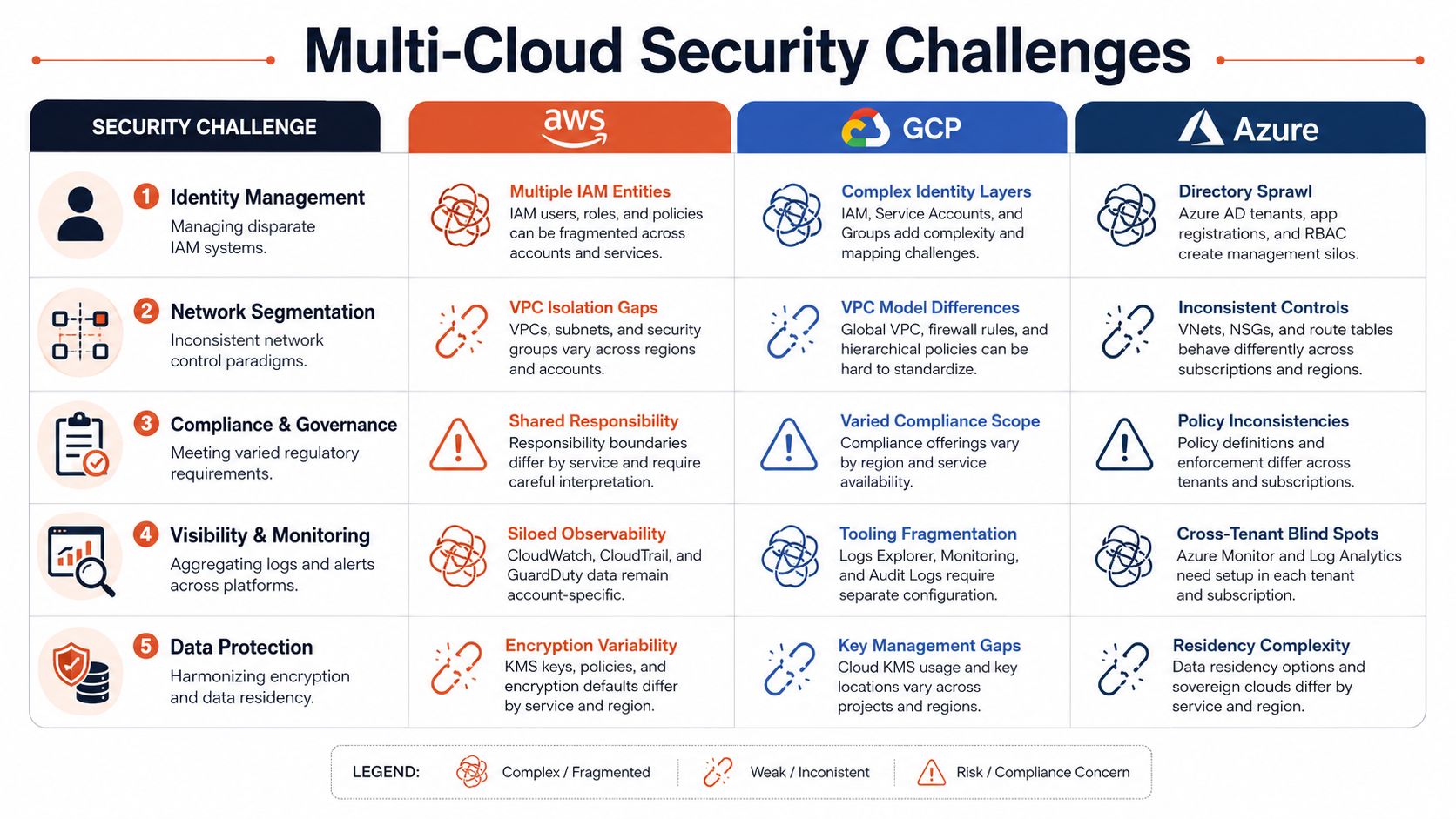
Those goals get harder to implement once they span multiple providers. AWS, GCP, and Azure use different IAM structures, network controls, service boundaries, and logging conventions. A policy that is simple in one cloud often needs translation work in the other two, and that translation work becomes ongoing operational cost.
The problem is not only technical design. It is maintenance. Teams end up writing and maintaining glue code for tags, identity mapping, routing rules, account structure, and policy enforcement. Then a provider changes a service, a new business unit needs an exception, or an audit requires a different evidence trail. The automation grows. So does the failure surface.
Inconsistency and misconfiguration are the primary risks
Misconfigured cloud environments remain a major source of security incidents, as IBM notes in its overview of cloud security misconfigurations. In multi-cloud setups, the odds go up because teams are trying to enforce one security model across platforms that were never designed to share the same defaults.
The symptoms show up quickly:
- Identity drift between engineers, CI systems, and third-party integrations
- Different segmentation models for each cloud, which makes least-privilege access harder to verify
- Fragmented visibility because telemetry lives in separate native tools
- Audit friction when security teams need to reconstruct who had access to what, and when
For teams comparing multi-cloud management approaches, the build decision becomes expensive. Each additional cloud adds another set of exceptions, another policy language, and another operational queue for someone to own.
I have seen capable platform teams handle each provider well on its own and still struggle to secure the system as a whole. That is the hidden cost. Competence inside each cloud does not automatically produce consistency across them.
A managed layer reduces that translation burden. Teams that adopt managed network security solutions are usually not giving up control. They are removing repetitive integration work so engineers can spend time on product, reliability, and the security issues that demand judgment.
The Build vs Buy Decision for Security Operations
A startup ships a customer-facing feature on Friday, then spends Monday tracing an access path across cloud logs, IAM policies, and a half-finished alerting stack after a suspicious event. That is the build versus buy decision in practice. The true cost is rarely the licence line item. It is the engineering time lost to policy upkeep, investigations, audits, change reviews, on-call fatigue, and the steady pull of senior engineers away from product work.
Compliance pressure makes that trade-off harsher.
Compliance turned speed into a reporting problem
For teams that fall under the EU's NIS2 Directive, incident handling is not just a security workflow. It is a timed reporting process. The European Commission's NIS2 overview states that covered entities must submit an early warning within 24 hours, an incident notification within 72 hours, and a final report within one month, across a broad set of sectors covered by the directive, including energy, transport, health, digital infrastructure, and public administration. See the European Commission's NIS2 page for the directive details: https://digital-strategy.ec.europa.eu/en/policies/nis2-directive
A DIY stack can meet those requirements. The question is what it takes to keep it ready. Fast reporting depends on clean telemetry, access history, ownership boundaries, and runbooks that still work under pressure. If engineers have to stitch evidence together by hand during an incident, the platform is already too expensive.
What build really means
Building in-house appeals to teams that want control, but control comes with an ownership list that expands every quarter:
- Policy design across cloud, CI/CD, runtime, and identity systems
- Tool integration so logs, alerts, and access events line up during investigations
- Operational upkeep for version changes, drift, broken automations, and provider updates
- Documentation and training so the system survives team changes
- Incident readiness so evidence and reports can be produced on deadline
A useful outside reference for leaders assessing service boundaries is this overview of managed network security solutions. It helps clarify what belongs inside a specialist platform or managed service and what your internal team should still own.
DIY security stack vs managed platform
| Factor | DIY Security Stack | Managed Platform (e.g., PushOps) |
|---|---|---|
| Setup model | Assemble tools and cloud primitives yourself | Start from prebuilt controls and workflows |
| IAM and permissions | Custom policy design and ongoing review | Standardised role-based access patterns |
| Segmentation | Hand-maintained cloud networking rules | Policy-driven defaults across environments |
| Auditability | Logs spread across providers and tools | Centralised logging and clearer access history |
| Incident readiness | Depends on internal runbooks and data stitching | Better baseline visibility and response context |
| Engineering focus | Infra work competes with product delivery | More engineering time stays with product teams |
| Maintenance burden | Continuous | Lower day-to-day operational overhead |
Why buy usually wins for startups
For startups and scale-ups, buying usually wins because the hidden costs of building show up in staffing and delay, not just invoices. Security operations need sustained ownership. Someone has to maintain the integrations, review policy changes, test failure cases, and keep evidence trails usable for audits and incidents. That work does not disappear because the first version is live.
A managed DevOps and cloud infrastructure platform reduces that repetitive implementation burden. The team still owns risk decisions, approvals, and exceptions. What they stop owning is a pile of bespoke glue code and manual process that adds little product value.
I have seen strong engineering teams build a respectable first version of a security stack. Six months later, they are paying for it through drift, alert noise, inconsistent access patterns, and recurring cleanup work. Buying does not remove responsibility. It removes a category of operational overhead that early-stage teams usually cannot justify carrying themselves.
Implementing Security Without the Overhead
A lower-overhead approach starts by accepting a constraint many teams try to ignore: they don't have a dedicated platform or security engineering bench, and they don't need one just to reach a sane baseline. The wider resource gap is real. The Aspen Institute's discussion of the cyber poverty line notes that 65% of some organisations have zero cybersecurity expertise, which is why bridging the cyber poverty line matters as a practical operating model, not just a policy concept.
For startups, the implication is simple. Security has to be delivered in a way that ordinary product teams can operate.
Map the platform to the security pillars
A managed platform should reduce manual work across the same five pillars described earlier.
- Perimeter controls become reusable environment patterns instead of one-off firewall changes.
- Segmentation becomes policy enforcement rather than hand-edited route logic.
- Identity and access become role-based workflows instead of sprawling JSON policy maintenance.
- Encryption is handled through managed defaults, secret handling, and safer certificate workflows.
- Monitoring improves because logs, access history, and environment activity are visible in one operating surface.
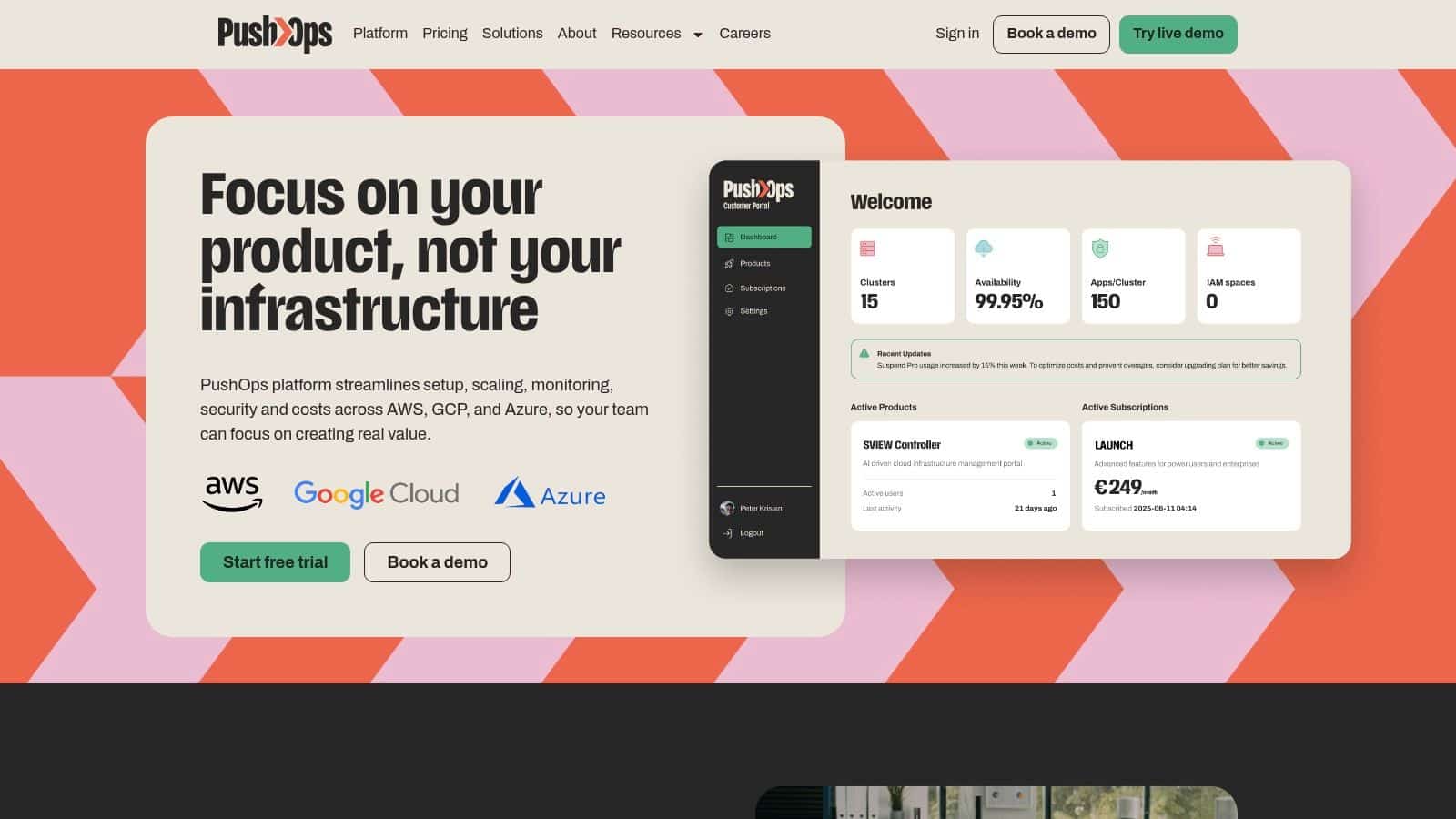
For example, a tool like PushOps provisions production-ready infrastructure on AWS, GCP, and Azure, then layers in role-based access, permissions, audit logs, policy enforcement, observability, and continuous updates. The important point isn't the brand. It's the operating model. Developers shouldn't have to become cloud security specialists to deploy safely.
What practical implementation looks like
Instead of asking a small team to build a complete internal platform, a managed approach gives them a narrower set of jobs:
- Define access boundaries. Decide who can reach which environments and who can approve production changes.
- Use standard environment patterns. Keep public, private, staging, and production layouts consistent.
- Centralise audit evidence. Make access changes and deployment events easy to review.
- Automate the boring controls. Let the platform handle repetitive enforcement and updates.
If you're operating across regulated regions or distributed delivery teams, it's also worth reading region-specific operational guidance such as this mainland China digital security guide, especially when local constraints affect how services are exposed, monitored, or accessed.
Security by default is more valuable than security by documentation. Small teams need controls that hold even when nobody has time to reread the runbook.
Conclusion Ship Features Not Infrastructure
Network security matters because downtime, data exposure, and weak access control all become business problems fast. But that doesn't mean every software company should build its own security operating system from scratch. Most shouldn't.
The pattern is consistent. Teams start with reasonable DIY decisions. Then those decisions multiply into scripts, exceptions, policy drift, access sprawl, and a growing set of tools that need constant care. Senior engineers become translators between product goals and infrastructure constraints. Delivery slows. Risk doesn't disappear. It just changes shape.
The better path is usually to standardise more and customise less. Use a platform that gives you secure defaults, consistent controls, central visibility, and a workable operating model across cloud environments. Keep engineering attention where it creates advantage: product, customer experience, reliability, and growth.
If you're leading engineering, this is the fundamental question to ask. Are your best people building features customers will notice, or maintaining infrastructure they had to invent because the stack gave them no better option?
PushOps gives software teams a way to run cloud infrastructure and deployments without turning every security requirement into a platform engineering project. If you want a production-ready setup across AWS, GCP, or Azure with built-in access control, audit logs, observability, and policy enforcement, take a look at PushOps.

